 When selecting heat-shrink tubing for an electrical, industrial, automotive, or manufacturing application, many factors influence performance. Diameter, shrink ratio, material type, operating temperature, and environmental resistance are all important considerations.
One specification that is often overlooked—but plays a major role in performance—is heat-shrink tubing wall thickness.
The thickness of the tubing wall affects insulation capability, mechanical protection, durability, flexibility, and resistance to environmental challenges. Choosing the correct wall thickness helps ensure that the tubing performs reliably throughout the life of the application.
Understanding how wall thickness works allows engineers, manufacturers, and installers to select the right heat-shrink tubing for their specific needs.
What Is Heat-Shrink Tubing Wall Thickness?
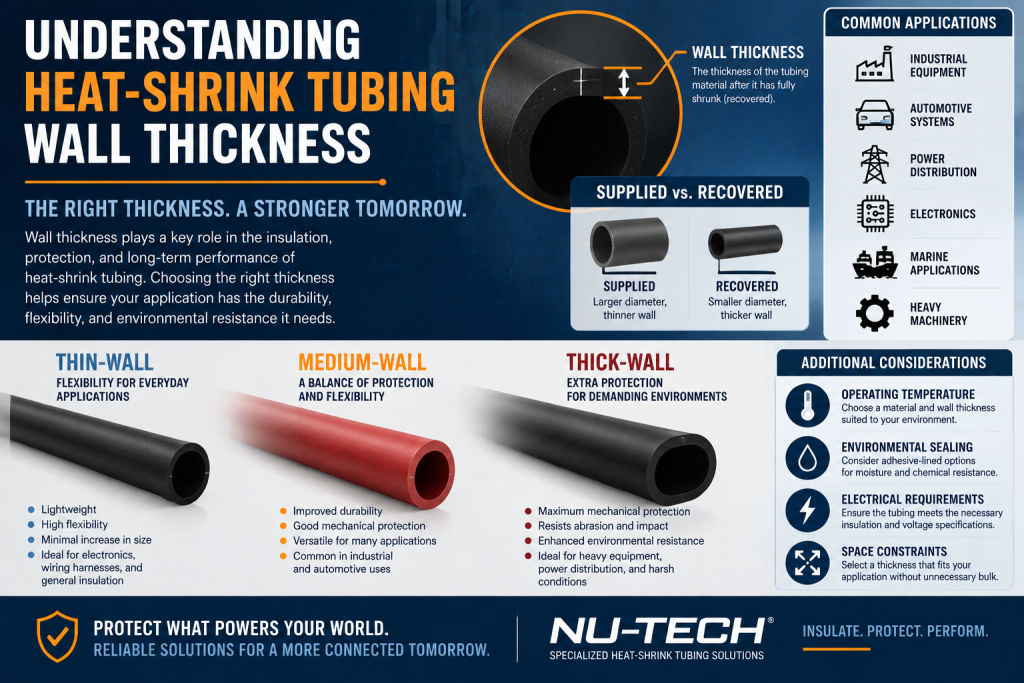
Heat-shrink tubing wall thickness refers to the thickness of the polymer material that surrounds the protected component after the tubing has recovered.
Before shrinking, heat-shrink tubing typically has a larger diameter and thinner wall. When heat is applied, the tubing contracts tightly around the cable, connector, terminal, or other component. As the diameter decreases, the wall thickness increases.
Manufacturers typically provide wall thickness specifications in two forms:
- Supplied wall thickness: The thickness of the tubing before shrinking
- Recovered wall thickness: The thickness after the tubing has fully shrunk
The recovered wall thickness is often the more important specification because it represents the final protective layer around the component.
Why Wall Thickness Matters
Heat-shrink tubing serves multiple purposes beyond simply covering a wire.
The wall thickness influences how well the tubing can:
- Insulate electrical components
- Resist abrasion and mechanical damage
- Protect against moisture and contaminants
- Provide strain relief
- Withstand temperature changes
- Improve long-term reliability
A tubing product with insufficient wall thickness may not provide enough protection for demanding applications. However, selecting tubing that is unnecessarily thick can reduce flexibility, increase size, and make installation more difficult.
The goal is to find the appropriate balance between protection and practicality.
How Wall Thickness Affects Electrical Insulation
One of the primary functions of heat-shrink tubing is electrical insulation.
A thicker recovered wall generally provides a greater physical barrier between conductive components and surrounding materials. This can be particularly important in applications involving higher voltage requirements or environments where additional insulation protection is needed.
However, wall thickness alone does not determine electrical performance.
Other factors also matter, including:
- Material composition
- Dielectric strength
- Operating temperature
- Application design
- Required voltage rating
For example, a thinner tubing made from a high-performance insulating material may outperform a thicker tubing made from a less suitable material.
Engineers should always evaluate the complete electrical specifications rather than relying only on thickness.
Thin-Wall Heat-Shrink Tubing
Thin-wall heat-shrink tubing is designed for applications where flexibility, weight, and space efficiency are important.
Because the recovered wall is relatively thin, this type of tubing can conform easily around smaller wires, components, and complex shapes.
Common advantages include:
- Lightweight protection
- High flexibility
- Easy installation
- Minimal increase in overall size
- Suitable performance for general electrical protection
Thin-wall tubing is commonly used in applications such as:
- Electronics
- Wiring harnesses
- Small electrical assemblies
- Consumer devices
- Cable identification
- General wire insulation
While thin-wall tubing provides excellent protection in many applications, it may not be the best choice where heavy abrasion, mechanical stress, or extreme environmental exposure are expected.
Thick-Wall Heat-Shrink Tubing
Thick-wall heat-shrink tubing provides a heavier protective layer after recovery.
This additional material can improve resistance against:
- Impact
- Abrasion
- Mechanical stress
- Harsh environments
- Physical damage
Thick-wall tubing is often selected for applications where durability is more important than minimizing size.
Common uses include:
- Industrial equipment
- Power distribution systems
- Heavy machinery
- Outdoor electrical installations
- Large cable assemblies
- Utility applications
In demanding environments, the added protection of thicker tubing can help extend the service life of electrical connections and reduce maintenance requirements.
Medium-Wall Heat-Shrink Tubing
Medium-wall heat-shrink tubing provides a balance between flexibility and protection.
It is often used when an application requires more durability than thin-wall tubing but does not require the heavier construction of thick-wall products.
Advantages include:
- Improved mechanical protection
- Better environmental resistance
- Moderate flexibility
- Versatility across multiple applications
Medium-wall tubing is commonly found in industrial, automotive, and electrical applications where a balance between performance and installation convenience is needed.
Wall Thickness and Mechanical Protection
Electrical systems frequently experience mechanical stress.
Cables may be exposed to:
- Vibration
- Repeated movement
- Pulling forces
- Sharp edges
- Contact with surrounding components
- Installation-related stress
A thicker heat-shrink wall provides more material between the protected component and potential sources of damage.
For example, a cable installed inside heavy industrial equipment may require significantly more mechanical protection than a small wire inside an electronic device.
Choosing the correct wall thickness helps match the tubing’s protection level to the actual environment.
Wall Thickness and Environmental Protection
Moisture, chemicals, dirt, and other contaminants can shorten the life of electrical connections.
Thicker tubing can provide additional physical protection, especially when combined with adhesive-lined construction.
Adhesive-lined heat-shrink tubing contains an inner adhesive layer that melts during installation and flows around the enclosed component. Once cooled, this creates a stronger environmental barrier against moisture and contaminants.
Applications requiring environmental sealing often benefit from considering both:
- Recovered wall thickness
- Adhesive or sealing properties
A thicker wall alone does not automatically create a waterproof seal.
The Relationship Between Shrink Ratio and Wall Thickness
Shrink ratio is another important factor that affects final wall thickness.
Common heat-shrink ratios include:
- 2:1
- 3:1
- 4:1
- Higher specialized ratios
A higher shrink ratio allows tubing to fit over larger components while still recovering tightly around smaller cables or connections.
Because the material compresses during recovery, wall thickness typically increases as the tubing shrinks.
For example, a tubing product designed to shrink significantly may have a much thicker recovered wall than its supplied dimensions suggest.
Understanding the relationship between shrink ratio and wall thickness helps ensure the final installation provides the intended level of protection.
Wall Thickness in Power Distribution Applications
Power distribution systems often require specialized protection due to high electrical loads, environmental exposure, and the importance of reliability.
Heat-shrink tubing used in these systems may need to provide:
- Electrical insulation
- Mechanical reinforcement
- Environmental protection
- Long-term durability
Medium-wall and thick-wall tubing products are commonly considered for applications such as:
- Cable joints
- Terminations
- Power connections
- Busbar insulation
- Industrial electrical equipment
The appropriate wall thickness depends on the electrical specifications and operating environment.
Wall Thickness in Automotive Applications
Automotive systems require protection against vibration, temperature changes, moisture, and physical movement.
Heat-shrink tubing is widely used for:
- Wiring harnesses
- Battery cables
- Sensor connections
- Electrical repairs
- Terminal protection
Thin-wall tubing may be appropriate for compact wiring applications, while thicker tubing may be preferred for areas exposed to heat, vibration, or mechanical stress.
Electric vehicles and modern automotive systems can create additional demands because of higher electrical complexity and increased power requirements.
How to Choose the Right Wall Thickness
Selecting the correct wall thickness requires evaluating the full application.
Important questions include:
What Level of Mechanical Protection Is Needed?
Applications exposed to impact, abrasion, or vibration may require thicker tubing.
Is Flexibility Important?
Compact electronics and moving assemblies may benefit from thinner, more flexible tubing.
Is Environmental Sealing Required?
Applications exposed to moisture, chemicals, or outdoor conditions may require adhesive-lined or thicker-wall products.
What Are the Electrical Requirements?
Voltage, insulation requirements, and operating conditions should determine the appropriate tubing specification.
How Much Space Is Available?
A thicker wall increases the final size of the protected component. Space limitations should always be considered during design.
Common Mistakes When Selecting Wall Thickness
Choosing heat-shrink tubing based only on diameter is one of the most common mistakes.
Other common issues include:
Selecting Tubing That Is Too Thin
This can result in insufficient mechanical protection or reduced durability in harsh environments.
Selecting Tubing That Is Too Thick
Overly thick tubing may create unnecessary bulk, reduce flexibility, and make installation more difficult.
Ignoring Recovered Dimensions
The final recovered wall thickness and diameter are what determine actual performance after installation.
Focusing Only on Cost
The least expensive option may not provide the required protection. A properly selected product can reduce failures and maintenance costs over time.
Proper Installation Improves Performance
Even correctly selected heat-shrink tubing must be installed properly.
Installation considerations include:
- Correct tubing size
- Proper positioning
- Even heat application
- Complete recovery
- Avoiding overheating
- Allowing the tubing to cool properly
Improper installation can affect the final wall thickness, seal quality, and protective performance.
Following manufacturer guidelines helps ensure the tubing performs as designed.
Selecting the Right Heat-Shrink Tubing Solution
Wall thickness is one of the most important specifications when choosing heat-shrink tubing.
Thin-wall products provide lightweight and flexible protection for many everyday electrical applications. Medium-wall tubing offers a balance of durability and flexibility. Thick-wall products provide enhanced mechanical and environmental protection for demanding environments.
The best choice depends on the complete application requirements, including electrical performance, mechanical stress, environmental exposure, temperature, and available space.
By understanding how heat-shrink tubing wall thickness affects performance, engineers and manufacturers can make more informed decisions and create more reliable electrical systems.
Nu-Tech provides specialized heat-shrink tubing solutions designed for a wide range of industrial, electrical, and manufacturing applications. With options available for insulation, protection, sealing, and demanding environments, selecting the right tubing can help improve reliability and extend component life.