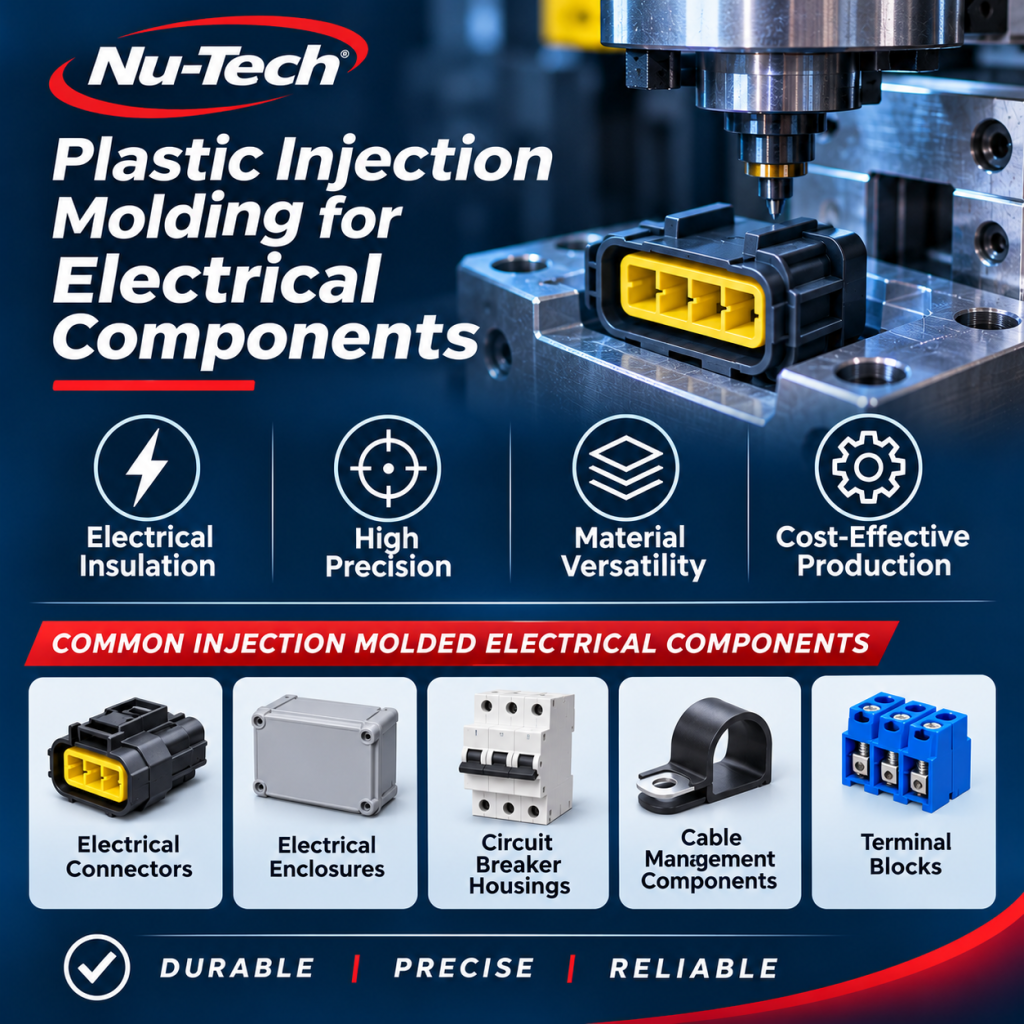
 Plastic injection molding plays an essential role in the electrical and electronics industries. From electrical connectors and protective housings to insulating components and circuit breaker enclosures, this manufacturing process allows manufacturers to produce precise, durable, and reliable plastic parts.
With its material versatility, dimensional accuracy, and high production efficiency, plastic injection molding is an ideal solution for many electrical manufacturing applications.
Why Is Plastic Injection Molding Used for Electrical Components?
Electrical components often require a combination of mechanical strength, electrical insulation, heat resistance, and dimensional stability. Plastic injection molding allows manufacturers to achieve these characteristics while maintaining consistent product quality.
The process involves injecting molten plastic into a precision-engineered mold, allowing the material to cool and solidify before removing the finished component.
Manufacturers can produce complex electrical components with detailed geometries, mounting features, and protective structures while minimizing the need for secondary manufacturing operations.
Common Injection Molded Electrical Components
Plastic injection molding is used to manufacture a wide variety of electrical and electronic components, including:
- Electrical connectors: Protective connector bodies that support and insulate electrical contacts.
- Electrical enclosures: Housings that protect sensitive electrical equipment from environmental exposure and physical damage.
- Circuit breaker housings: Durable insulating structures designed to withstand demanding operating conditions.
- Switches and sockets: Precision-molded components used in commercial, residential, and industrial electrical systems.
- Cable management components: Clips, clamps, guides, and protective cable fittings.
- Terminal blocks: Insulating structures that support secure electrical connections.
- Electronic device housings: Protective outer shells for electronic equipment and control systems.
- Bobbin and coil components: Insulating structures used in transformers, motors, and other electromagnetic devices.
The versatility of injection molding makes it suitable for both miniature electronic components and larger industrial electrical assemblies.
Best Materials for Injection Molded Electrical Components
Selecting the appropriate plastic resin is critical when manufacturing electrical components. Materials must meet the electrical, mechanical, thermal, and environmental requirements of their intended applications.
Several commonly used materials include:
Polycarbonate (PC)
Polycarbonate offers excellent impact resistance, dimensional stability, and electrical insulation properties. It is commonly used in electrical enclosures, protective covers, and electronic housings.
Nylon (PA)
Nylon provides excellent mechanical strength, wear resistance, and thermal performance. It is frequently used in electrical connectors, cable management products, and industrial electrical components. Moisture absorption must be considered during material selection.
Polybutylene Terephthalate (PBT)
PBT offers good electrical insulation, dimensional stability, and heat resistance. It is widely used in electrical connectors, switches, and automotive electrical systems.
Polyphenylene Sulfide (PPS)
PPS is a high-performance engineering plastic with excellent thermal and chemical resistance. It is suitable for demanding electrical applications involving elevated operating temperatures.
Acrylonitrile Butadiene Styrene (ABS)
ABS offers good impact resistance, surface finish, and manufacturing efficiency. It is commonly used in electronic device housings and protective enclosures where extreme thermal resistance is not required.
Flame-retardant grades of these and other plastics may be selected when specific electrical safety requirements must be met.
Benefits of Plastic Injection Molding for Electrical Components
Excellent Electrical Insulation
Many engineering plastics provide excellent electrical insulation, helping prevent unintended electrical contact and supporting the safe operation of electrical assemblies.
High Precision and Consistency
Electrical components frequently require accurate dimensions to ensure proper assembly and reliable connections. Injection molding enables manufacturers to produce consistent components across large production runs.
Complex Design Capabilities
Injection molding allows manufacturers to incorporate mounting features, snap-fit connections, reinforcing ribs, and intricate internal geometries directly into plastic components.
Cost-Effective Production
Once the injection mold has been manufactured, large quantities of electrical components can be produced efficiently with relatively low costs per unit.
Durability and Environmental Resistance
Depending on the selected material, injection molded components can offer resistance to heat, moisture, chemicals, impact, and other environmental conditions commonly encountered in electrical applications.
Insert Molding and Overmolding for Electrical Applications
Insert molding and overmolding are particularly valuable manufacturing techniques in the electrical industry.
Insert molding involves placing a premanufactured component, such as a metal terminal or threaded insert, into the mold before injecting plastic around it. This creates an integrated component that can reduce assembly requirements.
Overmolding involves molding an additional material over an existing component. Electrical manufacturers frequently use this technique to create protective cable assemblies, connector housings, and strain relief features.
Both processes can improve component durability, simplify assembly, and enhance protection when properly designed.
Important Design and Safety Considerations
Electrical components must often meet demanding performance and safety requirements. When designing injection molded electrical parts, manufacturers should consider:
- Electrical insulation and dielectric strength
- Flame resistance and applicable UL 94 classifications
- Operating temperature and thermal stability
- Dimensional tolerances and material shrinkage
- Moisture absorption and chemical resistance
- Creepage and clearance requirements
- Mechanical strength and impact resistance
Proper material selection, precision mold design, and thorough quality control are essential for meeting application-specific electrical safety standards.
The Importance of Injection Mold Maintenance
Precision is particularly important when manufacturing electrical components, as even minor dimensional inconsistencies can interfere with assembly and performance.
Regular injection mold maintenance helps prevent defects, reduce production downtime, and maintain consistent component quality.
When molds experience localized wear or damage, specialized repair processes such as micro-TIG welding may help restore tooling surfaces and extend their operational lifespan.
Conclusion
Plastic injection molding is an essential manufacturing process for electrical components, offering precision, material versatility, production efficiency, and excellent design flexibility.
By selecting suitable materials, optimizing component designs, and maintaining high-quality tooling, manufacturers can produce reliable electrical components for a wide range of industrial and commercial applications.
At Nu-Tech, we understand the importance of precision, material performance, and reliable industrial manufacturing solutions. Visit www.nu-tech.us to learn more about our specialized capabilities and services.