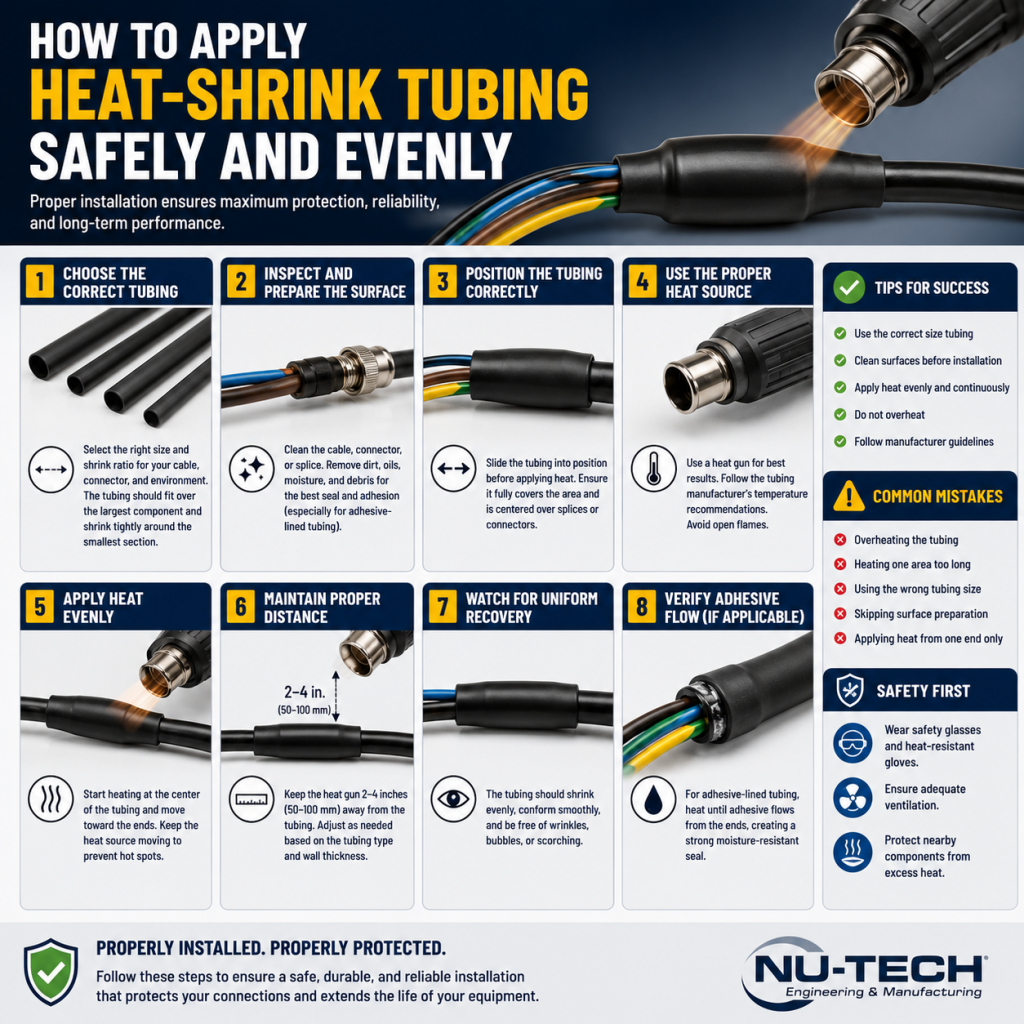
 How to Apply Heat-Shrink Tubing Safely and Evenly
Heat-shrink tubing is one of the most effective solutions for protecting electrical connections, cable assemblies, wire harnesses, and splices. When properly installed, it provides insulation, strain relief, moisture resistance, and protection against environmental contaminants.
However, achieving these benefits depends on correct installation. Applying heat-shrink tubing improperly can result in uneven shrinking, trapped air pockets, inadequate sealing, or even damage to the tubing and underlying components.
In this guide, we’ll explain how to apply heat-shrink tubing safely and evenly to maximize performance and reliability.
Why Proper Installation Matters
Heat-shrink tubing is designed to create a secure protective barrier around wires, connectors, and cable assemblies.
Improper installation can lead to:
- Incomplete insulation
- Poor environmental sealing
- Reduced strain relief
- Premature tubing failure
- Damaged cables or connectors
- Increased maintenance costs
Taking the time to install heat-shrink tubing correctly helps ensure long-term protection and reliable electrical performance.
Step 1: Choose the Correct Tubing Size
Before installation begins, select the appropriate tubing for the application.
Consider:
- Cable diameter
- Connector size
- Shrink ratio
- Environmental requirements
- Operating temperature
The tubing must be large enough to fit over the largest component while shrinking tightly around the smallest section.
If connectors or transitions are involved, high-ratio shrink tubing may be required.
Step 2: Inspect and Prepare the Surface
Clean surfaces promote better performance and more reliable results.
Before installing the tubing:
- Remove dirt and debris
- Eliminate moisture
- Clean away oils and grease
- Inspect for damage
Contaminants trapped beneath the tubing can compromise sealing and long-term reliability.
Step 3: Position the Tubing Correctly
Slide the tubing into its final position before applying heat.
Make sure:
- The tubing fully covers the intended area.
- Splices are centered beneath the tubing.
- Connectors and transitions are adequately protected.
- The tubing extends beyond exposed conductors.
Taking a few moments to verify placement can prevent rework later.
Step 4: Use the Proper Heat Source
The best results are achieved using a controlled heat source designed for heat-shrink applications.
Common options include:
Heat Guns
Heat guns are the preferred tool for most installations because they provide controlled, consistent heating.
Industrial Shrink Ovens
Shrink ovens may be used for high-volume manufacturing and production environments.
Specialized Heating Equipment
Certain industrial applications use dedicated heating systems designed for specific shrink products.
Avoid Open Flames
Open flames from torches or lighters can create uneven heating and increase the risk of damaging the tubing or cable assembly.
Whenever possible, use equipment designed specifically for heat-shrink installation.
Step 5: Apply Heat Evenly
Even heating is the key to achieving a professional installation.
Begin heating near the center of the tubing and gradually work toward the ends.
This approach helps:
- Prevent trapped air
- Reduce wrinkles
- Improve conformity
- Create a more uniform finish
Keep the heat source moving continuously rather than concentrating heat in one location.
The goal is to warm the tubing evenly across its entire surface.
Step 6: Maintain Proper Distance
Holding the heat source too close can damage both the tubing and the cable assembly.
Holding it too far away may result in uneven shrinking.
Follow the tubing manufacturer’s recommendations for:
- Heat source distance
- Temperature range
- Installation procedures
A moderate, consistent distance typically produces the best results.
Step 7: Watch for Uniform Recovery
As the tubing shrinks, observe the recovery process carefully.
Properly installed tubing should:
- Shrink evenly
- Conform smoothly to the surface
- Remain free of wrinkles
- Show no signs of scorching
- Create a snug fit
Uneven shrinkage may indicate inconsistent heating or improper positioning.
Step 8: Verify Adhesive Flow (If Applicable)
For adhesive-lined heat-shrink tubing, proper heating allows the internal adhesive to flow and seal the connection.
Signs of successful sealing may include:
- Smooth tubing recovery
- Visible adhesive at the ends
- Uniform adhesion around the protected area
Avoid overheating, as excessive temperatures can degrade the tubing or adhesive.
Common Installation Mistakes to Avoid
Overheating the Tubing
Excessive heat can cause:
- Cracking
- Burn marks
- Deformation
- Reduced performance
Always use controlled heating methods.
Heating One Area Too Long
Concentrated heating can create uneven shrinkage and weak spots.
Keep the heat source moving continuously.
Using the Wrong Tubing Size
Tubing that is too large may not provide adequate protection.
Tubing that is too small may not fit over the assembly.
Proper sizing is critical.
Skipping Surface Preparation
Contaminants can interfere with sealing and long-term reliability.
Clean surfaces before installation whenever possible.
Applying Heat from One End Only
Heating exclusively from one side can trap air beneath the tubing.
Starting near the center and working outward typically produces better results.
Safety Considerations
When installing heat-shrink tubing, always follow basic safety practices.
Wear Appropriate PPE
Depending on the environment, PPE may include:
- Safety glasses
- Heat-resistant gloves
- Protective clothing
Follow Equipment Instructions
Always use heating equipment according to the manufacturer’s recommendations.
Maintain Adequate Ventilation
Some applications may require proper ventilation during installation.
Protect Nearby Components
Sensitive electronics, plastics, and heat-sensitive materials should be shielded from direct heat exposure whenever possible.
Industries That Depend on Proper Heat-Shrink Installation
Correct installation practices are critical across many industries, including:
- Industrial manufacturing
- Marine systems
- Aerospace
- Transportation
- Telecommunications
- Energy and utilities
- Defense applications
In these environments, reliable cable protection contributes directly to safety, uptime, and equipment performance.
The Benefits of Properly Installed Heat-Shrink Tubing
When applied correctly, heat-shrink tubing delivers:
- Electrical insulation
- Moisture resistance
- Environmental protection
- Strain relief
- Abrasion resistance
- Improved reliability
- Professional appearance
These advantages help extend equipment life while reducing maintenance and repair costs.
Conclusion
Heat-shrink tubing is a simple but highly effective cable protection solution—provided it is installed correctly. Choosing the proper tubing, preparing surfaces, using controlled heating equipment, and applying heat evenly all contribute to a successful installation.
By following proven installation practices, technicians and engineers can maximize the protective benefits of heat-shrink tubing while improving electrical reliability, reducing failures, and extending the life of critical cable assemblies.
Whether you’re working in manufacturing, transportation, marine environments, or industrial maintenance, proper heat-shrink installation is an important step toward long-term system performance.