 Electrical systems are expected to perform reliably for years, often while facing heat, moisture, vibration, abrasion, chemicals, and other environmental stresses. Even when the major components of a system remain in excellent condition, something as small as a damaged wire or corroded connection can cause performance problems or complete electrical failure.
That is where heat-shrink tubing can make a significant difference.
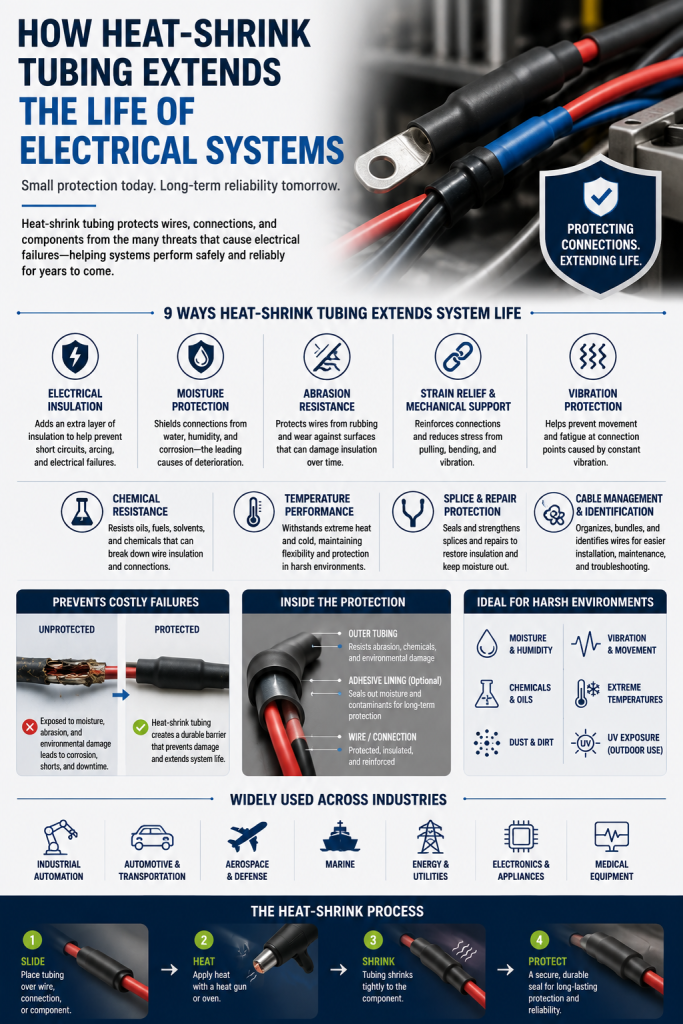
Heat-shrink tubing provides a durable protective layer around wires, cables, splices, terminals, and connections. By protecting these vulnerable areas from electrical, mechanical, and environmental damage, heat-shrink tubing can help extend the service life of an entire electrical system.
From industrial machinery and automotive wiring to aerospace equipment and electronics, proper cable protection can mean fewer failures, less maintenance, and longer-lasting electrical components.
What Is Heat-Shrink Tubing?
Heat-shrink tubing is a polymer sleeve designed to contract when exposed to the appropriate amount of heat.
Before installation, a piece of tubing is placed over a wire, cable, splice, terminal, or other component. Heat is then applied, causing the tubing to shrink tightly around the underlying surface.
The result is a close-fitting protective covering that can provide benefits such as:
- Electrical insulation
- Mechanical protection
- Abrasion resistance
- Strain relief
- Moisture resistance
- Chemical resistance
- Cable organization
- Environmental protection
Different heat-shrink materials and constructions are available for different applications, allowing engineers to select tubing based on the specific requirements of an electrical system.
Why Electrical Systems Deteriorate Over Time
Electrical systems rarely fail without a reason. Their components are continuously exposed to conditions that can gradually reduce their reliability.
Common causes of electrical system deterioration include:
- Moisture and humidity
- Corrosion
- Excessive heat
- Temperature fluctuations
- Abrasion
- Vibration
- Repeated bending
- Mechanical strain
- Chemical exposure
- Dirt and contaminants
- Damaged insulation
A wire may function perfectly when an electrical system is first installed, for example, but years of rubbing against another component can gradually damage its insulation.
Similarly, a connection exposed to moisture may slowly corrode until electrical performance becomes unreliable.
Heat-shrink tubing helps create an additional barrier between vulnerable electrical components and many of these damaging conditions.
Protecting Electrical Insulation
Insulation is one of the most important elements of an electrical system.
Conductors must remain properly isolated from other conductive surfaces. When insulation becomes damaged, electrical current may travel somewhere it was never intended to go.
This can contribute to:
- Short circuits
- Intermittent electrical problems
- Equipment malfunctions
- Component damage
- Electrical hazards
Heat-shrink tubing provides an additional insulating layer around appropriately selected wires and connections.
It can be particularly useful for protecting splices, solder joints, terminals, and other areas where the original insulation has been interrupted during assembly.
By maintaining reliable insulation around vulnerable areas, heat-shrink tubing can help electrical systems continue operating properly for longer periods.
Reducing Damage From Moisture and Humidity
Moisture is one of the greatest long-term threats to electrical connections.
Water, humidity, and condensation can contribute to corrosion of conductive materials. Corrosion can increase electrical resistance, weaken connections, and eventually cause components to fail.
In applications requiring enhanced environmental protection, adhesive-lined heat-shrink tubing can provide an effective solution.
When adhesive-lined tubing is heated, the outer tubing contracts while the internal adhesive softens and flows around the protected component. This helps fill small gaps and create a more complete environmental seal.
Such protection can be particularly valuable in:
- Outdoor electrical systems
- Industrial equipment
- Automotive applications
- Marine environments
- Agricultural machinery
- Transportation equipment
- Equipment exposed to washdowns
Preventing moisture from reaching critical connections can significantly improve their long-term durability.
Preventing Abrasion and Wear
Electrical cables are not always stationary.
Wires can move because of vibration, machinery operation, vehicle movement, thermal expansion, or normal servicing. When a cable repeatedly rubs against another component, its outer insulation can gradually wear away.
This type of abrasion may occur slowly enough to remain unnoticed until the conductor becomes exposed.
Heat-shrink tubing provides an additional layer of mechanical protection around vulnerable sections of wiring.
By reducing direct contact between the original cable insulation and abrasive surfaces, the tubing can help prevent premature wear.
This is particularly useful in electrical systems expected to operate for thousands of hours under demanding conditions.
Reducing Stress at Electrical Connections
A cable may be strong along most of its length while remaining vulnerable where it meets a connector or terminal.
Repeated pulling, bending, and movement can concentrate mechanical stress at these transition points.
Eventually, this can cause:
- Broken conductors
- Loose terminals
- Damaged connectors
- Intermittent electrical connections
Heat-shrink tubing can provide strain relief by reinforcing the area around a connection and distributing mechanical stress over a greater distance.
This additional support can be particularly valuable for wiring subjected to frequent movement or vibration.
Protecting Against Vibration
Vibration is a common challenge in automotive, aerospace, manufacturing, transportation, and heavy-equipment applications.
Motors, engines, pumps, compressors, generators, and other mechanical systems can expose electrical wiring to continuous movement.
Even small amounts of vibration can become significant when repeated over thousands of operating hours.
Heat-shrink tubing can reinforce electrical connections and protect cables from rubbing against surrounding components.
When incorporated into a properly designed cable-management system, it can help reduce vibration-related wear and extend the usable life of electrical assemblies.
Protecting Electrical Systems From Chemicals
Electrical wiring in industrial environments may encounter substances that ordinary insulation was not designed to withstand.
Depending on the application, cables may be exposed to:
- Oils
- Fuels
- Solvents
- Cleaning agents
- Hydraulic fluids
- Industrial chemicals
Certain heat-shrink materials are designed to provide resistance to particular chemicals and fluids.
Selecting tubing compatible with the expected operating environment can provide an additional layer of protection and help prevent premature deterioration of electrical components.
Improving Performance in Extreme Temperatures
Temperature can have a substantial effect on electrical materials.
High temperatures may cause some insulation materials to soften, degrade, or become brittle over time. Extremely low temperatures can also affect flexibility and mechanical performance.
Industrial equipment, vehicles, aerospace systems, and outdoor electrical installations may experience substantial temperature fluctuations throughout their service lives.
Heat-shrink tubing is available in materials designed for different temperature ranges.
Selecting tubing according to the application’s actual operating conditions helps protect electrical components while maintaining the required performance over time.
Reinforcing Wire Splices and Repairs
Electrical systems sometimes require repairs or modifications during their service lives.
When a damaged wire is repaired or two conductors are joined, the splice becomes an important point of protection.
Leaving a splice insufficiently protected can expose it to moisture, mechanical stress, and accidental contact.
Properly selected heat-shrink tubing can cover and reinforce repaired areas, helping restore insulation and providing mechanical protection around the connection.
Adhesive-lined tubing may also provide additional environmental protection when the application requires it.
A properly protected repair can help the electrical system continue operating reliably rather than allowing the repaired area to become a future failure point.
Improving Wire Harness Durability
Wire harnesses are found throughout modern electrical and electronic systems.
Vehicles, industrial machinery, aircraft, appliances, control systems, and specialized equipment may contain complex harnesses connecting numerous components.
Protecting individual wires and connection points can significantly influence the reliability of the complete harness.
Heat-shrink tubing can be used to:
- Protect wire junctions
- Reinforce connector transitions
- Insulate terminals
- Bundle certain groups of wires
- Protect vulnerable cable sections
- Identify circuits or components
These applications can improve both the physical durability and maintainability of wire harnesses.
Making Electrical Systems Easier to Maintain
Long service life is not only about preventing damage. Electrical systems should also be practical to inspect, troubleshoot, and maintain.
Heat-shrink tubing can be produced in different colors and may be suitable for identification or marking applications.
This can help technicians distinguish between:
- Circuits
- Cable groups
- Connections
- Components
- Voltage categories
- System functions
Clear identification can simplify maintenance and reduce the possibility of errors during troubleshooting or repair.
A system that is easier to maintain is also more likely to remain dependable throughout its intended operating life.
Reducing Unexpected Electrical Failures
Unexpected electrical failures can be expensive.
A relatively inexpensive wire or connection can disable equipment worth thousands—or considerably more—until technicians identify and repair the problem.
The resulting costs may include:
- Production downtime
- Emergency maintenance
- Replacement components
- Technician labor
- Delayed operations
- Lost productivity
Heat-shrink tubing is a relatively simple preventive measure that can help protect some of the most vulnerable areas within electrical assemblies.
By reducing exposure to moisture, abrasion, vibration, and mechanical stress, it can help decrease the likelihood of preventable wiring failures.
Applications Across Multiple Industries
Heat-shrink tubing is used wherever electrical reliability and component protection are important.
Industrial Manufacturing
Machinery and automation systems can expose electrical wiring to vibration, heat, chemicals, and continuous operation.
Automotive and Transportation
Vehicle wiring must withstand vibration, temperature changes, moisture, fluids, and years of regular use.
Aerospace
Aircraft electrical systems require dependable cable protection in demanding operating environments.
Electronics
Heat-shrink tubing can insulate and protect small electrical connections while maintaining a clean, organized assembly.
Medical Equipment
Electrical reliability is particularly important in equipment where consistent operation and precision are essential.
Energy and Utilities
Power equipment and electrical infrastructure may require protection against outdoor conditions and demanding service environments.
Choosing the Right Heat-Shrink Tubing
Heat-shrink tubing can only provide its intended protection when the correct product is selected and properly installed.
Important considerations include:
Material
Different polymers offer different combinations of flexibility, temperature resistance, chemical resistance, mechanical durability, and electrical properties.
Shrink Ratio
The shrink ratio determines how much the tubing can contract. It must fit over the largest portion of the component before installation while shrinking sufficiently around the smallest area requiring protection.
Wall Thickness
Wall thickness affects mechanical protection, flexibility, and the final dimensions of the installed tubing.
Temperature Rating
The tubing should be appropriate for both the installation process and the expected operating temperature of the finished electrical system.
Environmental Conditions
Moisture, chemicals, UV exposure, vibration, abrasion, and other conditions should be considered before selecting a heat-shrink product.
Adhesive Requirements
Applications requiring additional environmental sealing may benefit from adhesive-lined tubing.
Choosing heat-shrink tubing based on the actual application rather than treating all tubing as interchangeable is essential for dependable long-term performance.
Preventive Protection Can Mean Longer Service Life
Electrical system longevity often comes down to protecting small components before damage occurs.
A cable that never experiences serious abrasion does not need to be replaced because its insulation wore through. A properly protected connection is less likely to suffer premature deterioration from moisture or mechanical strain.
This is the fundamental value of heat-shrink tubing: preventing relatively small problems from becoming larger failures.
For manufacturers, engineers, and maintenance professionals, integrating the appropriate heat-shrink tubing into an electrical system can contribute to:
- Longer component life
- Fewer electrical failures
- Reduced maintenance
- Greater equipment reliability
- Less downtime
- Improved long-term performance
Conclusion
Heat-shrink tubing may be a small part of an electrical system, but its impact on long-term reliability can be substantial.
By providing electrical insulation, abrasion resistance, strain relief, mechanical reinforcement, and protection against environmental conditions, heat-shrink tubing helps preserve vulnerable wires and connections throughout their service lives.
The result can be an electrical system that requires fewer repairs, experiences fewer preventable failures, and remains dependable for longer.
Whether protecting industrial machinery, automotive wiring, electronics, aerospace equipment, or specialized electrical assemblies, choosing the right heat-shrink tubing is a simple but important step toward longer-lasting electrical systems and more reliable products.
How Heat-Shrink Tubing Extends the Life of Electrical Systems