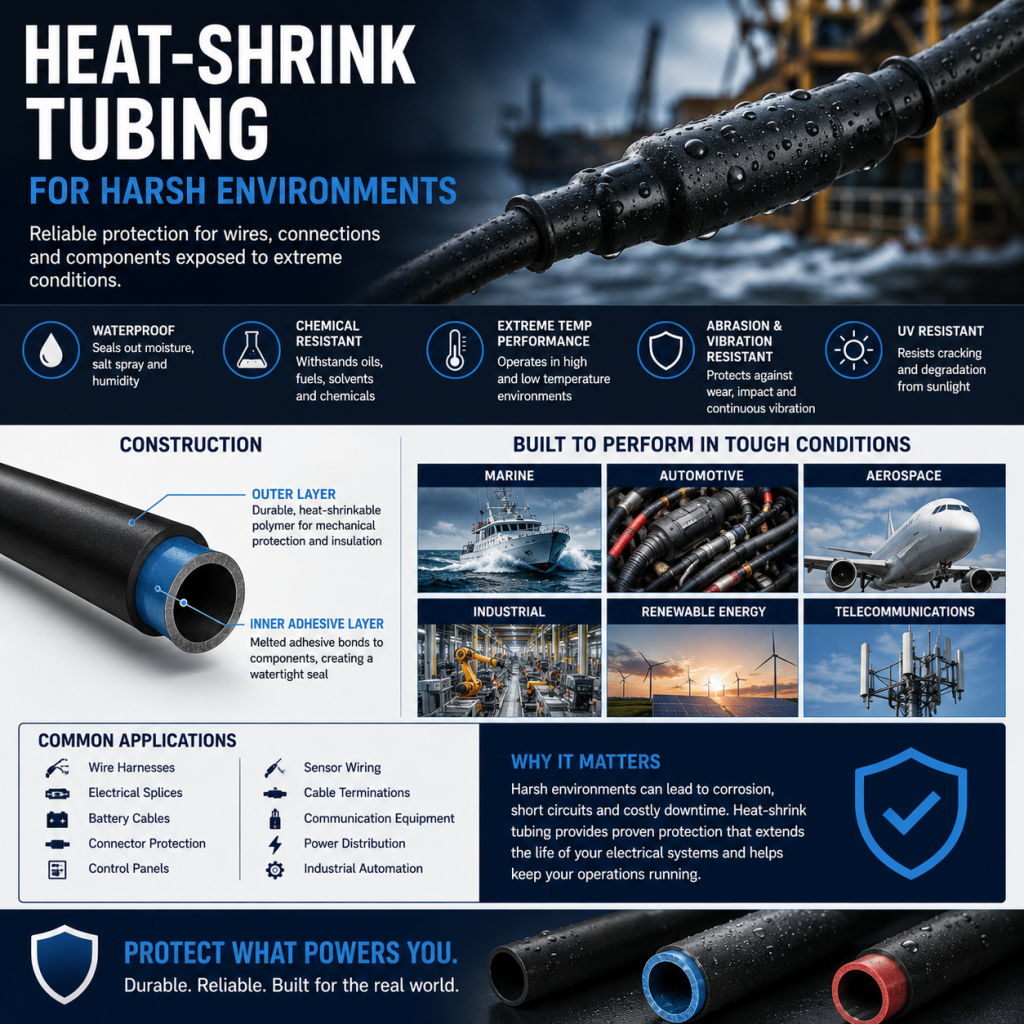
 Heat-Shrink Tubing for Harsh Environments
Electrical systems operating in extreme conditions require more than basic insulation. Whether exposed to moisture, chemicals, UV radiation, vibration, or wide temperature swings, cables and wire connections need durable protection to ensure long-term performance and reliability. Heat-shrink tubing is one of the most effective solutions for safeguarding electrical components in harsh environments.
From aerospace and automotive applications to marine systems and industrial manufacturing, heat-shrink tubing helps protect wiring from environmental hazards that can lead to premature failure, costly repairs, and unexpected downtime.
Why Harsh Environments Require Additional Protection
Electrical connections are often the most vulnerable points in a wiring system. Without proper protection, they can be damaged by external conditions such as:
- Water and humidity
- Salt spray
- Dust and dirt
- Industrial chemicals
- Oils and fuels
- UV exposure
- Abrasion
- Extreme temperatures
- Constant vibration
- Mechanical impact
Over time, these factors can contribute to corrosion, insulation breakdown, short circuits, and reduced equipment reliability.
Heat-shrink tubing creates a durable barrier that helps minimize these risks.
How Heat-Shrink Tubing Protects Electrical Systems
Heat-shrink tubing is a polymer sleeve that contracts when heated, forming a snug fit around wires, connectors, terminals, and cable assemblies.
Depending on the product selected, heat-shrink tubing can provide:
- Electrical insulation
- Abrasion resistance
- Environmental sealing
- Strain relief
- Chemical resistance
- Moisture protection
- Mechanical reinforcement
For especially demanding applications, adhesive-lined (dual-wall) heat-shrink tubing creates a waterproof seal by melting an inner adhesive layer that bonds to the underlying surfaces.
Key Features for Harsh Environments
Not all heat-shrink tubing is designed for extreme operating conditions. Selecting the appropriate material and construction is critical.
Moisture Resistance
Water intrusion is one of the leading causes of electrical failures. Adhesive-lined heat shrink seals gaps around connectors and wire splices, helping prevent moisture from reaching sensitive electrical components.
This makes it ideal for:
- Outdoor equipment
- Marine systems
- Underground installations
- Heavy machinery
Chemical Resistance
Many industrial environments expose wiring to oils, fuels, solvents, hydraulic fluids, and cleaning chemicals.
High-quality heat-shrink materials help resist chemical degradation while maintaining their protective properties over time.
Temperature Performance
Industrial equipment may experience both extreme heat and freezing conditions.
Specialized heat-shrink tubing is available with operating temperature ranges suitable for demanding applications, helping maintain insulation and mechanical performance across varying climates and operating environments.
Abrasion Protection
Moving cables and wire harnesses are subject to continuous rubbing against nearby components.
Heat-shrink tubing provides an additional protective layer that reduces wear caused by friction and vibration.
UV Resistance
Outdoor installations require protection from prolonged sunlight exposure.
UV-resistant heat-shrink tubing helps prevent cracking, fading, and material degradation caused by ultraviolet radiation.
Industries That Rely on Heat-Shrink Tubing
Aerospace
Aircraft wiring systems operate under demanding conditions that include vibration, altitude changes, temperature extremes, and strict reliability requirements.
Heat-shrink tubing helps protect wiring harnesses while supporting long-term system performance.
Automotive
Modern vehicles contain hundreds of electrical connections that must withstand:
- Road vibration
- Engine heat
- Moisture
- Road salt
- Fuel exposure
Heat-shrink tubing helps extend the service life of these critical systems.
Marine
Marine environments present one of the toughest challenges for electrical systems.
Saltwater, humidity, UV exposure, and corrosion make waterproof, adhesive-lined heat-shrink tubing an excellent choice for protecting onboard wiring.
Industrial Manufacturing
Factories often expose cables to:
- Dust
- Oils
- Chemicals
- Mechanical abrasion
- Continuous vibration
Heat-shrink tubing helps protect electrical systems while reducing maintenance requirements.
Renewable Energy
Solar, wind, and energy storage systems rely on electrical components that must remain dependable despite years of outdoor exposure.
Heat-shrink tubing provides durable insulation and environmental protection for these installations.
Choosing the Right Heat-Shrink Tubing
When selecting tubing for harsh environments, several factors should be evaluated.
Material Type
Different materials provide varying levels of performance.
Common options include:
- Polyolefin
- Fluoropolymer
- PVC
- Elastomer
- Specialized high-temperature materials
The ideal material depends on the application’s environmental and performance requirements.
Shrink Ratio
Typical shrink ratios include:
- 2:1
- 3:1
- 4:1
Higher shrink ratios accommodate larger differences between the tubing diameter before shrinking and the finished component size.
Adhesive-Lined vs. Standard
Standard heat-shrink tubing provides excellent insulation and abrasion resistance.
Adhesive-lined tubing adds:
- Waterproof sealing
- Enhanced strain relief
- Improved environmental protection
- Greater resistance to corrosion
For outdoor and harsh industrial environments, adhesive-lined tubing is often the preferred choice.
Best Practices for Installation
Proper installation is essential for achieving maximum protection.
Recommended practices include:
- Select the correct tubing size.
- Clean wires and connectors before installation.
- Apply heat evenly with an appropriate heat source.
- Avoid overheating the material.
- Allow the tubing to cool completely before placing the assembly into service.
Proper installation helps ensure consistent performance and long-term reliability.
Common Applications
Heat-shrink tubing is frequently used to protect:
- Wire harnesses
- Electrical splices
- Battery cables
- Sensor wiring
- Control panels
- Cable terminations
- Connectors
- Communication equipment
- Power distribution systems
- Industrial automation equipment
Its versatility makes it an essential component across countless electrical applications.
Why Heat-Shrink Tubing Is a Smart Investment
Electrical failures can lead to expensive repairs, equipment downtime, and safety concerns. Investing in high-quality heat-shrink tubing helps reduce those risks by protecting vulnerable connections from the environmental conditions they encounter every day.
When properly selected and installed, heat-shrink tubing improves durability, supports long-term system reliability, and extends the service life of electrical assemblies—even in the harshest operating environments.
Whether your application involves aerospace, automotive, marine, industrial manufacturing, telecommunications, or renewable energy, choosing the right heat-shrink tubing is an important step toward building dependable electrical systems that perform when it matters most.