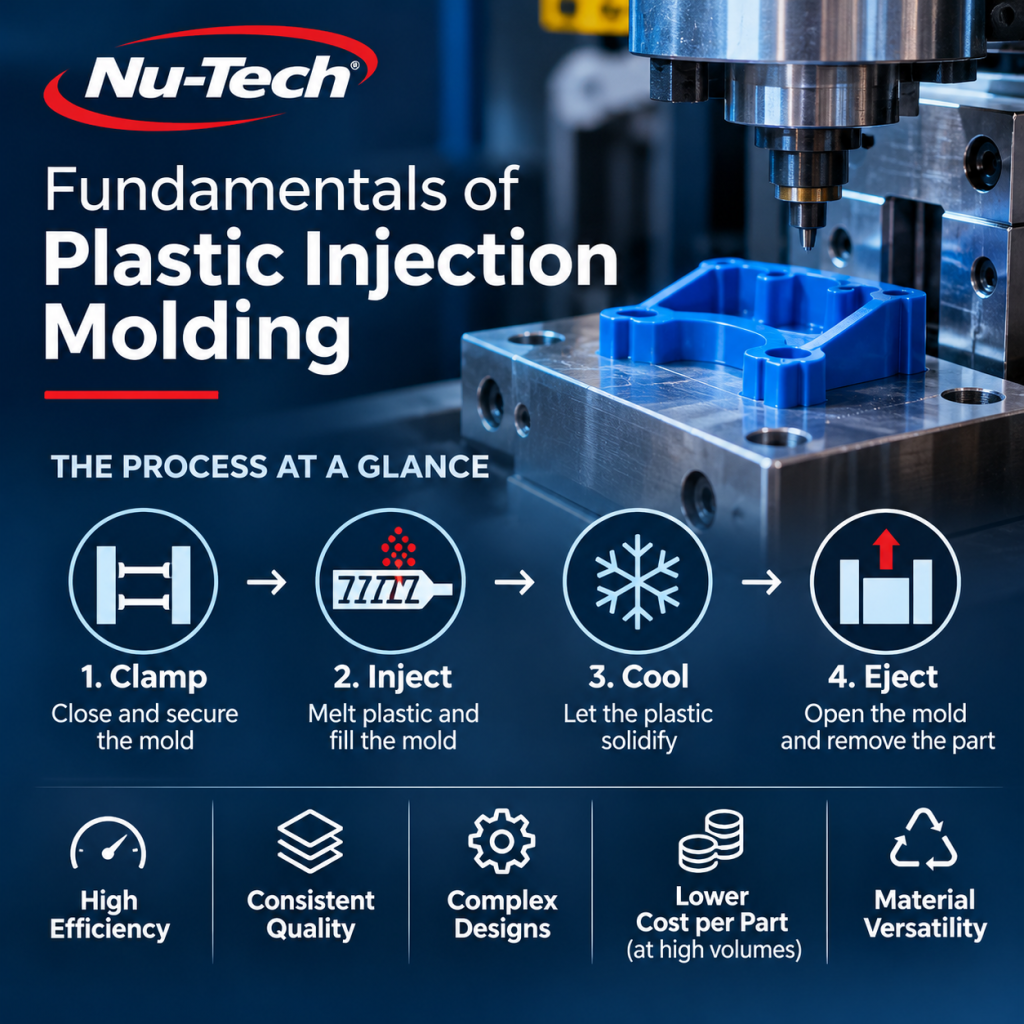
 Fundamentals of Plastic Injection Molding
Plastic injection molding is one of the most widely used manufacturing processes for producing plastic components. From automotive parts and medical devices to consumer electronics and industrial equipment, injection molding allows manufacturers to create precise, durable, and consistent products efficiently.
Understanding the fundamentals of plastic injection molding can help businesses make informed decisions about materials, product design, and manufacturing methods.
What Is Plastic Injection Molding?
Plastic injection molding is a manufacturing process that involves injecting molten plastic material into a specially designed mold. Once the plastic cools and solidifies, the mold opens, and the finished component is removed.
This process is particularly effective for producing large quantities of identical plastic parts with consistent dimensions and quality.
Injection molding is commonly used for manufacturing components with complex shapes, intricate details, and tight tolerances.
How Does Plastic Injection Molding Work?
The plastic injection molding process typically involves four primary stages:
1. Clamping
Before injection begins, the two halves of the mold are securely closed using a clamping unit. This prevents the mold from opening under the pressure of the injected plastic.
2. Injection
Plastic pellets are fed into a heated barrel, where they soften and melt. A rotating screw then pushes the molten plastic into the mold cavity under controlled pressure.
The plastic fills the cavity, taking the shape of the desired component.
3. Cooling
Once the mold cavity is filled, the plastic begins cooling and solidifying. The cooling time depends on factors such as material type, part thickness, and mold design.
Proper cooling is essential for maintaining dimensional accuracy and preventing defects.
4. Ejection
After the plastic has solidified sufficiently, the mold opens, and ejector pins or other mechanisms remove the finished component.
The mold then closes again, allowing the manufacturing cycle to repeat.
Common Materials Used in Plastic Injection Molding
One of the greatest advantages of plastic injection molding is its compatibility with a wide range of thermoplastic materials.
Common options include:
- Polypropylene (PP): Lightweight, flexible, and resistant to many chemicals.
- Acrylonitrile Butadiene Styrene (ABS): Known for its toughness, impact resistance, and attractive surface finish.
- Polyethylene (PE): Offers excellent chemical resistance and is commonly used in containers and industrial components.
- Polycarbonate (PC): Provides high impact resistance and can be used for transparent components.
- Nylon (PA): Offers strength and wear resistance, making it suitable for mechanical components.
Selecting the appropriate plastic depends on the intended application, environmental conditions, mechanical requirements, and production budget.
Advantages of Plastic Injection Molding
Plastic injection molding offers several benefits that make it attractive for industrial manufacturing.
High Production Efficiency
Once the mold has been manufactured and the process optimized, injection molding can produce large quantities of components relatively quickly.
Consistent Product Quality
Injection molding allows manufacturers to maintain consistent dimensions, shapes, and surface finishes across production runs.
Complex Design Capabilities
The process can accommodate intricate geometries, detailed features, and specialized component designs that may be difficult to achieve using other manufacturing methods.
Low Cost Per Part at High Volumes
Although injection molds can require a significant initial investment, the cost per component generally decreases as production quantities increase.
Material Versatility
Manufacturers can select from numerous plastic materials with different levels of strength, flexibility, heat resistance, and chemical resistance.
What Are the Limitations of Injection Molding?
Despite its advantages, plastic injection molding is not suitable for every manufacturing project.
The initial cost of designing and manufacturing a mold can be substantial, particularly for complex components. Additionally, modifying a finished mold may require expensive tooling changes.
Design considerations such as wall thickness, draft angles, and material shrinkage must also be addressed to prevent manufacturing defects.
For very small production quantities, alternative methods such as 3D printing or CNC machining may be more economical.
Common Applications of Plastic Injection Molding
Plastic injection molding is used across numerous industries, including:
- Automotive: Interior trim, connectors, housings, and mechanical components.
- Medical: Device housings, diagnostic equipment components, and disposable medical products.
- Electronics: Protective enclosures, switches, connectors, and insulating components.
- Industrial Manufacturing: Machine components, protective covers, and specialized plastic fittings.
- Consumer Products: Household appliances, containers, packaging, and everyday plastic goods.
Its versatility makes injection molding an important process for both specialized industrial applications and mass-produced consumer products.
The Importance of Mold Design and Maintenance
The quality of an injection molded component depends heavily on the condition and precision of its mold.
Proper mold design helps ensure consistent material flow, effective cooling, and reliable part ejection. Regular maintenance also helps prevent premature wear, surface damage, and production defects.
When injection molds experience localized damage or wear, specialized repair techniques, including micro-TIG welding, may help restore damaged tooling surfaces and extend mold service life.
Conclusion
Understanding the fundamentals of plastic injection molding is essential for businesses involved in plastic component design and manufacturing.
With its ability to produce complex, consistent, and durable components at scale, injection molding remains one of the most valuable processes in modern manufacturing.
At Nu-Tech, we understand the importance of precision, material performance, and reliable manufacturing solutions. Explore our website to learn more about our specialized industrial capabilities and services.