 As manufacturers look for ways to reduce material waste, lower production costs, and improve sustainability, recycled plastics are becoming an increasingly attractive option for industrial manufacturing.
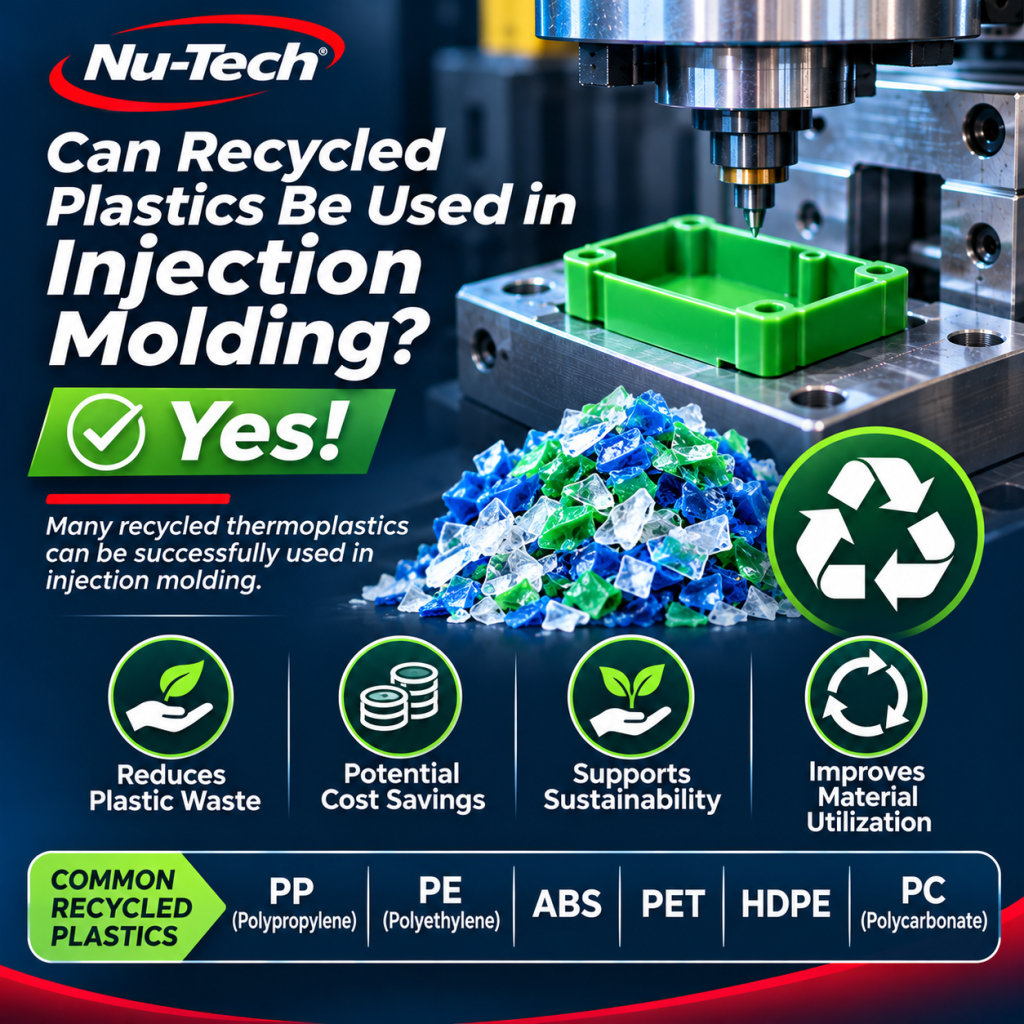
But can recycled plastics be used in injection molding? The answer is yes. Many recycled thermoplastics can be successfully used in plastic injection molding, provided they meet the material, processing, and performance requirements of the intended application.
How Are Recycled Plastics Used in Injection Molding?
Recycled plastics must undergo several preparation stages before they can be used in the injection molding process.
Plastic waste is typically collected, sorted, cleaned, shredded, and processed into flakes or pellets. Depending on the material and its quality, recycled plastic can be used independently or blended with virgin plastic resin.
The prepared material is then fed into an injection molding machine, heated until molten, and injected into a precision-engineered mold. Once the plastic cools and solidifies, the finished component is ejected.
Although the basic manufacturing process remains the same, processing temperatures, injection pressures, and cooling times may need to be adjusted to accommodate recycled materials.
Common Recycled Plastics Used in Injection Molding
Several types of recycled thermoplastics are suitable for injection molding applications, including:
- Polypropylene (PP): Commonly used in automotive components, containers, and household products.
- Polyethylene (PE): Suitable for various industrial components, packaging products, and containers.
- Acrylonitrile Butadiene Styrene (ABS): Frequently used in electronic housings, automotive trim, and consumer products.
- Polyethylene Terephthalate (PET): Can be processed into various molded products when properly prepared and dried.
- High-Density Polyethylene (HDPE): Offers good durability and chemical resistance for numerous industrial applications.
- Polycarbonate (PC): Can be recycled for selected applications requiring mechanical strength and impact resistance.
The suitability of each material depends on its source, purity, processing history, and remaining physical properties.
Post-Industrial vs. Post-Consumer Recycled Plastics
Recycled plastics used in injection molding generally fall into two categories.
Post-Industrial Recycled Plastics (PIR)
Post-industrial recycled plastics originate from manufacturing waste, including rejected components, excess material, sprues, and runners.
Because these materials often come from controlled manufacturing environments, their composition and processing history are generally easier to verify.
Post-Consumer Recycled Plastics (PCR)
Post-consumer recycled plastics originate from products that consumers have previously used and discarded, such as packaging, containers, and electronic housings.
These materials may require more extensive sorting, cleaning, and processing to remove contaminants and achieve consistent material properties.
Benefits of Using Recycled Plastics in Injection Molding
Reduced Material Waste
Using recycled plastics allows manufacturers to repurpose existing materials and reduce the amount of plastic waste sent to landfills.
Potential Cost Savings
Recycled plastic resins can be less expensive than virgin materials. However, actual savings depend on material availability, processing requirements, quality, and market conditions.
Reduced Environmental Impact
Incorporating recycled materials can reduce demand for virgin plastic production and potentially lower the environmental footprint of manufactured components.
Improved Material Utilization
Manufacturers can sometimes reprocess production scrap and incorporate it into future production runs, improving material efficiency and reducing waste.
Support for Sustainable Manufacturing
Using recycled plastics helps businesses support circular economy initiatives, sustainability objectives, and applicable recycled-content requirements.
Challenges of Using Recycled Plastics in Injection Molding
Despite their advantages, recycled plastics can introduce several manufacturing challenges.
Inconsistent Material Properties
Recycled plastics may exhibit variations in strength, viscosity, color, and thermal performance. These inconsistencies can affect material flow and finished component quality.
Material Degradation
Repeated exposure to heat and mechanical stress can degrade plastic polymers, potentially reducing their strength, flexibility, and impact resistance.
Contamination
Residual adhesives, incompatible plastics, dirt, and other contaminants can introduce manufacturing defects and compromise component performance.
Surface Finish and Appearance
Achieving consistent colors and high-quality cosmetic finishes may be more challenging when using recycled materials.
Processing Adjustments
Recycled plastics may require additional drying, filtration, material testing, or adjustments to injection molding parameters to achieve reliable results.
Can Recycled Plastics Replace Virgin Plastics Completely?
In certain applications, manufacturers can produce injection molded components using 100% recycled plastic. However, this is not suitable for every product.
Components used in medical, food-contact, electrical, and safety-critical applications may have strict material performance, traceability, and regulatory requirements.
Blending recycled plastic with virgin resin can help manufacturers balance sustainability, material consistency, mechanical performance, and production costs.
The appropriate recycled content should be determined through material testing, application-specific requirements, and manufacturing trials.
Common Applications for Recycled Injection Molded Plastics
Recycled plastics are used in a wide variety of injection molding applications, including:
- Automotive interior and non-critical components
- Storage containers and organizational products
- Industrial packaging and protective components
- Household goods and furniture accessories
- Agricultural equipment components
- Selected electronic housings
- Non-critical industrial fittings and brackets
As recycling technologies and material processing methods improve, recycled plastics may become suitable for an even wider range of manufacturing applications.
The Importance of Quality Control
When using recycled plastics in injection molding, quality control is particularly important.
Manufacturers should evaluate material consistency, mechanical properties, moisture content, melt flow characteristics, and dimensional accuracy to ensure finished components meet their intended specifications.
Proper mold design, regular tooling maintenance, and optimized processing conditions can also help minimize defects and maintain consistent production quality.
Conclusion
Recycled plastics can be successfully used in injection molding, offering manufacturers opportunities to reduce material waste, improve sustainability, and potentially lower production costs.
However, achieving reliable results requires careful material selection, appropriate processing conditions, precision tooling, and thorough quality control.
At Nu-Tech, we understand the importance of material performance, precision, and reliable industrial manufacturing solutions. Visit www.nu-tech.us to learn more about our specialized industrial capabilities and services.