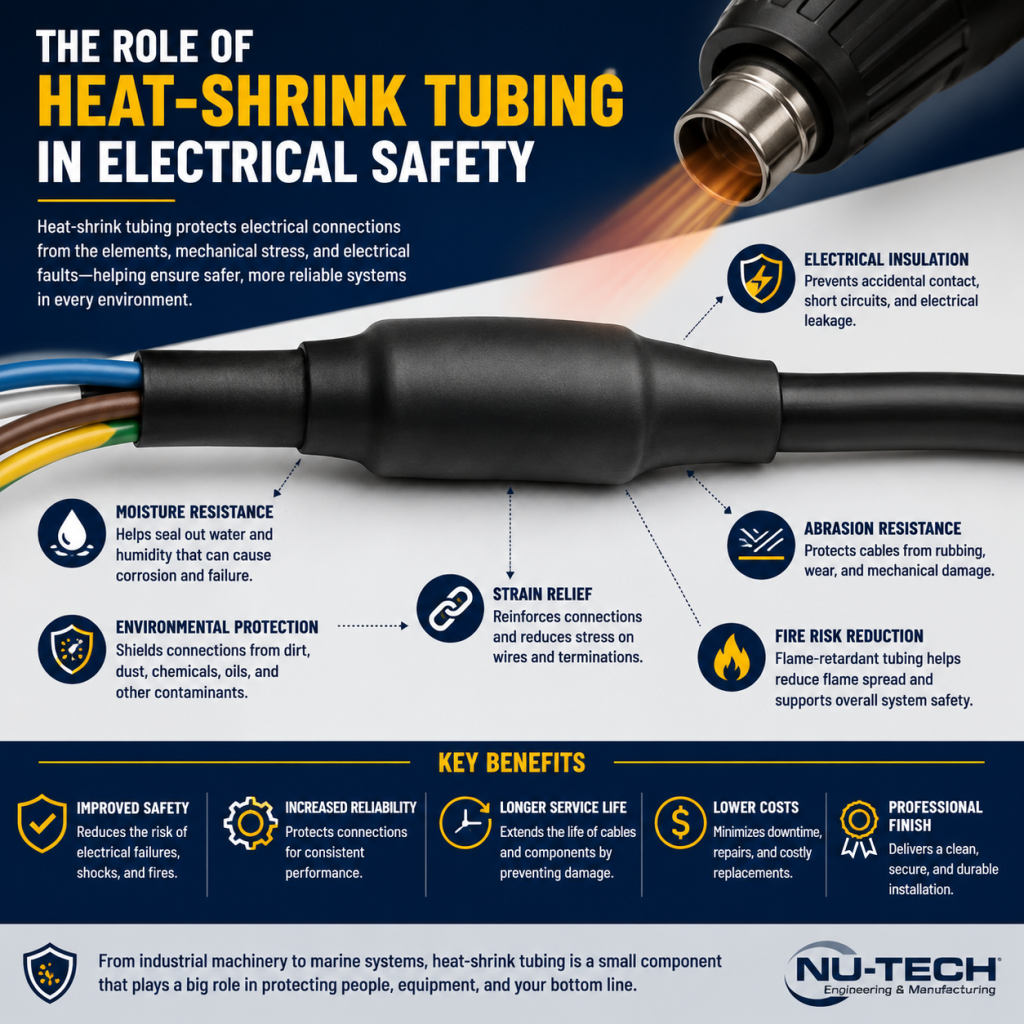
 The Role of Heat-Shrink Tubing in Electrical Safety
Electrical systems are only as reliable as the protection surrounding their wires, connections, and components. While cables and connectors often receive the most attention during design and installation, the protective materials used around them play a critical role in overall system safety.
One of the most effective and widely used solutions for protecting electrical connections is heat-shrink tubing. From industrial machinery and transportation systems to marine equipment and telecommunications infrastructure, heat-shrink tubing helps prevent electrical failures, reduce hazards, and improve long-term reliability.
In this article, we’ll explore the role of heat-shrink tubing in electrical safety and why it remains an essential component in modern electrical systems.
What Is Heat-Shrink Tubing?
Heat-shrink tubing is a specially engineered polymer sleeve that contracts when exposed to heat. Once installed over a wire, splice, connector, or cable assembly, the tubing shrinks to form a tight protective layer around the underlying component.
Heat-shrink tubing is available in various materials, shrink ratios, wall thicknesses, and performance grades to meet the needs of different industries and environments.
Its primary purpose is to provide protection, insulation, and reinforcement where electrical systems are most vulnerable.
Why Electrical Safety Matters
Electrical failures can lead to serious consequences, including:
- Equipment damage
- Production downtime
- Electrical shorts
- Fire hazards
- Shock risks
- Costly repairs
- System failures
Many of these problems originate at cable splices, connectors, and transition points where conductors are exposed to environmental conditions or mechanical stress.
Heat-shrink tubing helps address these risks by creating an additional layer of protection around critical electrical components.
Electrical Insulation
One of the most important functions of heat-shrink tubing is electrical insulation.
Exposed conductors can create dangerous conditions if they come into contact with:
- Other wires
- Conductive surfaces
- Metal equipment
- Moisture
Heat-shrink tubing provides a protective barrier that helps prevent accidental electrical contact and short circuits.
By covering exposed wiring and connection points, heat-shrink tubing reduces the likelihood of electrical faults that could compromise system safety.
Protection Against Short Circuits
Short circuits occur when electrical current travels along an unintended path.
These events can result in:
- Equipment damage
- Overheating
- Component failure
- Fire risks
Heat-shrink tubing helps isolate conductors and maintain proper separation between electrical pathways.
When properly installed, it adds an extra layer of protection that reduces the risk of accidental contact between energized components.
Moisture Resistance
Water and electricity are a dangerous combination.
Moisture intrusion can contribute to:
- Corrosion
- Insulation breakdown
- Electrical leakage
- Connection failures
Many heat-shrink tubing products are designed to help seal connections against moisture exposure.
Adhesive-lined heat-shrink tubing offers even greater protection by creating a barrier that helps prevent water from reaching sensitive electrical components.
This is particularly important in:
- Marine environments
- Outdoor installations
- Transportation systems
- Industrial facilities
- Underground applications
Protection from Environmental Contaminants
Electrical systems are frequently exposed to contaminants that can degrade performance over time.
These contaminants may include:
- Dust
- Dirt
- Chemicals
- Oils
- Salt spray
- Corrosive substances
Heat-shrink tubing helps shield connections and cable assemblies from these environmental hazards, reducing the likelihood of premature failure.
Strain Relief and Mechanical Protection
Electrical connections often experience vibration, movement, and mechanical stress during operation.
Without adequate support, repeated flexing can weaken wires and connectors, eventually leading to failure.
Heat-shrink tubing provides valuable strain relief by reinforcing vulnerable areas such as:
- Cable terminations
- Connector transitions
- Splice locations
- Wire harness breakouts
By reducing stress on the conductor itself, heat-shrink tubing can help extend the life of the electrical system.
Abrasion Resistance
Cables frequently rub against equipment, structures, and other wiring during normal operation.
Over time, this friction can wear away insulation and expose conductors.
Heat-shrink tubing provides an additional protective layer that helps resist abrasion and mechanical wear.
This added durability is especially valuable in:
- Industrial machinery
- Heavy equipment
- Automotive systems
- Aerospace applications
- Transportation infrastructure
Improved Connection Reliability
Reliable electrical connections are essential for both performance and safety.
Loose, damaged, or contaminated connections can create:
- Intermittent faults
- Voltage drops
- Excessive heat
- Unexpected shutdowns
Heat-shrink tubing helps stabilize and protect these connections, contributing to more consistent electrical performance over the life of the system.
Fire Risk Reduction
While no protective material can eliminate every fire risk, properly selected heat-shrink tubing can contribute to a safer electrical system.
Many heat-shrink products are manufactured using flame-retardant materials designed to help:
- Reduce flame spread
- Protect wiring
- Improve overall system safety
These properties make heat-shrink tubing a valuable component in applications where fire protection is a key concern.
Industries That Rely on Heat-Shrink Tubing for Safety
Heat-shrink tubing plays an important role in electrical safety across numerous industries.
Industrial Manufacturing
Manufacturing equipment often operates in harsh environments where cables are exposed to vibration, moisture, and mechanical stress.
Marine Systems
Marine applications require protection from water intrusion, salt exposure, and constant movement.
Transportation
Rail, automotive, aviation, and transit systems rely on heat-shrink tubing to protect critical electrical connections.
Energy and Utilities
Power generation and utility infrastructure require reliable cable protection to maintain system integrity.
Telecommunications
Communication networks depend on protected connections to ensure consistent performance and minimize outages.
Defense and Aerospace
Mission-critical systems require durable electrical protection that can withstand demanding operating conditions.
Choosing the Right Heat-Shrink Tubing
To maximize safety benefits, it is important to select the appropriate product for the application.
Consider factors such as:
- Operating temperature
- Voltage requirements
- Exposure to moisture
- Chemical resistance needs
- Abrasion resistance requirements
- Shrink ratio
- Wall thickness
In applications where environmental sealing is required, adhesive-lined heat-shrink tubing may provide the best solution.
Best Practices for Installation
Even the highest-quality heat-shrink tubing must be installed correctly to provide effective protection.
Best practices include:
- Selecting the proper tubing size
- Cleaning surfaces before installation
- Applying heat evenly
- Avoiding overheating
- Following manufacturer recommendations
- Inspecting the finished installation
Proper installation helps ensure that the tubing delivers its full insulation and protection capabilities.
Conclusion
Heat-shrink tubing is far more than a finishing accessory for electrical systems. It plays a vital role in electrical safety by providing insulation, preventing short circuits, resisting moisture intrusion, protecting against environmental contaminants, reducing mechanical stress, and improving overall system reliability.
Whether protecting a simple wire splice or a complex industrial cable assembly, heat-shrink tubing helps reduce risk and improve long-term performance. For engineers, technicians, OEM manufacturers, and maintenance teams, it remains one of the most effective and economical tools available for enhancing electrical safety.