 Electrical connections and wire harnesses are often exposed to moisture, chemicals, vibration, and harsh operating environments. While standard heat-shrink tubing provides excellent insulation and protection, some applications demand a higher level of environmental sealing. That’s where adhesive-lined heat shrink comes in.
Adhesive-lined heat shrink tubing offers the benefits of traditional heat shrink while creating a waterproof, durable seal around wires, connectors, and components. In industries where reliability is critical, it has become a preferred solution for protecting electrical systems and extending service life.
Understanding Adhesive-Lined Heat Shrink
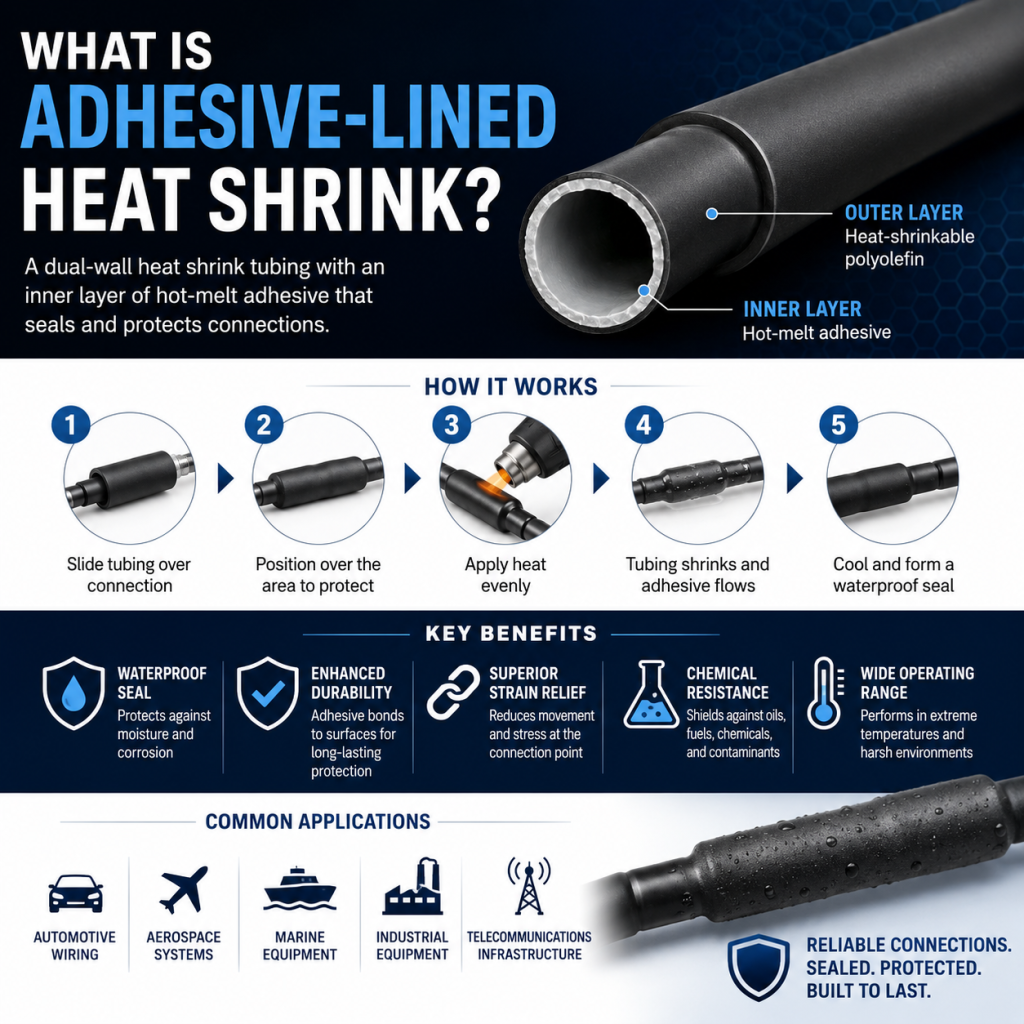
Adhesive-lined heat shrink tubing, sometimes called dual-wall heat shrink, consists of two layers:
- An outer layer made from heat-shrinkable polymer material, typically polyolefin.
- An inner layer of thermoplastic adhesive that melts during the heating process.
As heat is applied, the tubing shrinks around the component while the adhesive melts and flows into gaps, creating a tight environmental seal. Once cooled, the adhesive solidifies, helping prevent moisture, dust, chemicals, and contaminants from reaching the protected connection.
How Does Adhesive-Lined Heat Shrink Work?
The installation process is straightforward:
- Slide the tubing over the wire, connector, or splice.
- Position it over the area requiring protection.
- Apply heat evenly using a heat gun or other approved heating tool.
- Watch as the tubing shrinks and the adhesive begins to flow.
- Allow the assembly to cool completely.
The result is a mechanically secure and environmentally sealed connection that can withstand challenging operating conditions.
Key Benefits of Adhesive-Lined Heat Shrink
Superior Moisture Protection
One of the primary reasons manufacturers choose adhesive-lined heat shrink is its ability to create a waterproof seal. The melted adhesive fills voids and gaps that standard tubing cannot address, helping protect sensitive electrical components from water intrusion.
Enhanced Strain Relief
The adhesive bonds to the underlying surfaces, providing additional support and reducing movement at the connection point. This helps prevent damage caused by vibration, bending, and repeated handling.
Improved Environmental Resistance
Adhesive-lined tubing helps protect against:
- Dust and dirt
- Salt spray
- Chemicals
- Oils and fuels
- Humidity
- Corrosion
This makes it an excellent choice for demanding industrial environments.
Long-Term Reliability
By sealing out contaminants and stabilizing connections, adhesive-lined heat shrink can help extend the lifespan of wiring systems and reduce maintenance requirements.
Common Applications
Automotive Wiring
Vehicles are constantly exposed to vibration, temperature fluctuations, road salt, and moisture. Adhesive-lined heat shrink is frequently used to protect wire splices, harnesses, and electrical connectors throughout automotive systems.
Aerospace Systems
Aircraft wiring and electronic assemblies require exceptional reliability. Adhesive-lined tubing helps provide the environmental protection necessary for mission-critical components.
Marine Equipment
Boats and marine systems operate in highly corrosive environments. Waterproof heat-shrink solutions help safeguard electrical connections from saltwater exposure and humidity.
Industrial Equipment
Manufacturing facilities often expose equipment to chemicals, dust, vibration, and extreme temperatures. Adhesive-lined heat shrink provides durable protection for wiring and cable assemblies.
Telecommunications Infrastructure
Outdoor telecommunications equipment benefits from sealed connections that can withstand weather exposure and environmental contaminants.
Adhesive-Lined vs. Standard Heat Shrink
While both products provide insulation and mechanical protection, adhesive-lined heat shrink offers several additional advantages.
| Feature | Standard Heat Shrink | Adhesive-Lined Heat Shrink |
|---|---|---|
| Electrical Insulation | Yes | Yes |
| Moisture Seal | Limited | Excellent |
| Environmental Protection | Moderate | Superior |
| Strain Relief | Moderate | Enhanced |
| Corrosion Protection | Limited | Excellent |
| Harsh Environment Performance | Good | Outstanding |
For applications where moisture intrusion or environmental exposure is a concern, adhesive-lined tubing is often the better choice.
Choosing the Right Adhesive-Lined Heat Shrink
When selecting adhesive-lined tubing, consider:
Shrink Ratio
Common shrink ratios include:
- 2:1
- 3:1
- 4:1
Higher shrink ratios can accommodate greater variation in component sizes.
Operating Temperature
Ensure the tubing’s temperature rating matches the application’s operating environment.
Chemical Exposure
Different materials offer varying levels of resistance to fuels, oils, solvents, and other chemicals.
Industry Requirements
Certain industries require compliance with specific standards and certifications. Always verify that the selected product meets applicable requirements.
Best Practices for Installation
To achieve optimal performance:
- Use the correct tubing size.
- Clean surfaces before installation.
- Apply heat evenly.
- Avoid overheating the tubing.
- Allow the adhesive to cool completely before handling.
Proper installation helps ensure a reliable seal and maximum service life.
Why Adhesive-Lined Heat Shrink Matters
In many industries, electrical failures are often caused by moisture intrusion, corrosion, vibration, or environmental contamination. Adhesive-lined heat shrink provides a simple but highly effective solution for protecting critical connections against these threats.
By combining insulation, mechanical support, and environmental sealing into a single product, adhesive-lined heat shrink helps improve reliability, reduce maintenance costs, and extend the life of electrical systems.
Whether you’re designing aerospace assemblies, automotive wiring harnesses, industrial equipment, or telecommunications infrastructure, adhesive-lined heat shrink offers an extra level of protection that standard tubing alone cannot provide.