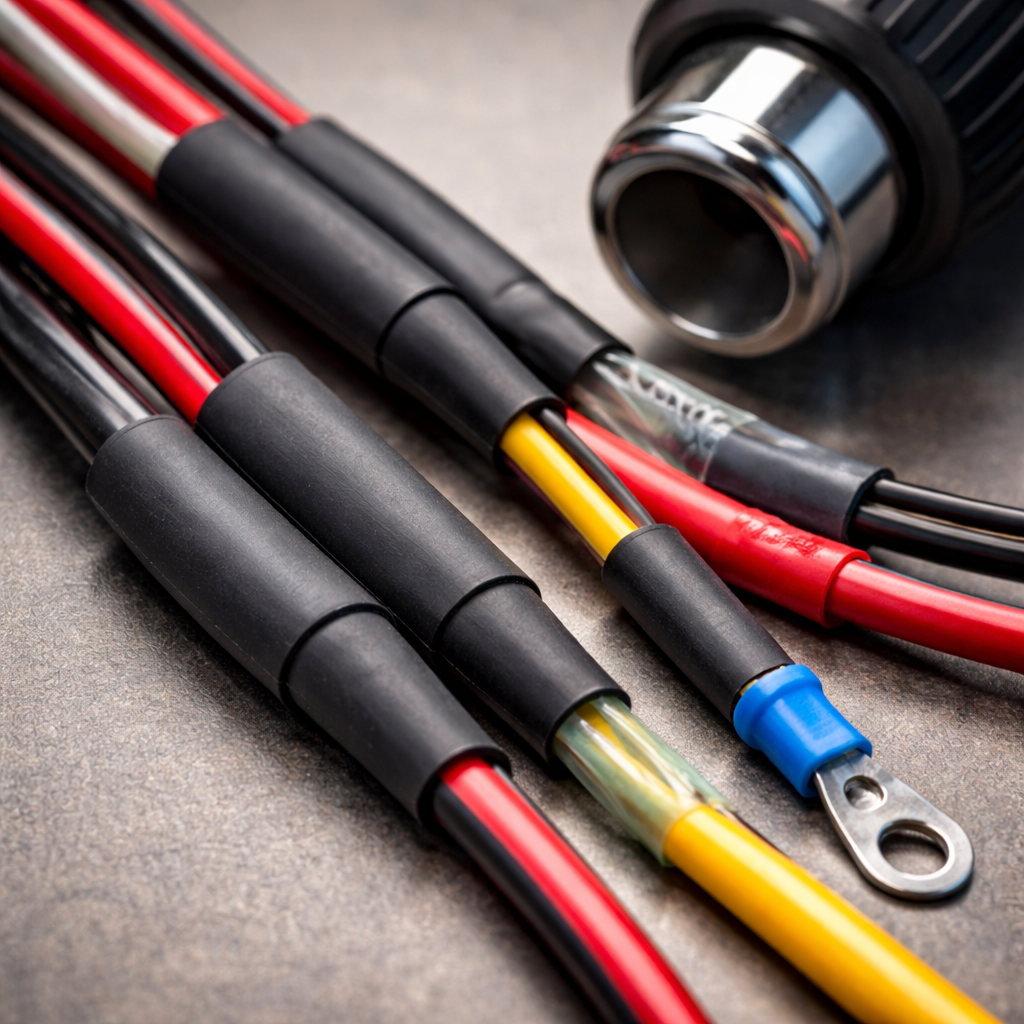
 Heat shrink sleeving is a protective polymer covering that contracts when heat is applied. Once installed, it forms a tight, durable seal around wires, connectors, terminals, and cable bundles.
Used across industries like automotive, aerospace, telecommunications, marine, and manufacturing, heat shrink sleeving is a reliable solution for electrical insulation and cable protection.
1. Superior Electrical Insulation
One of the most important benefits of heat shrink sleeving is electrical protection.
When applied over exposed conductors or splices, it:
-
Prevents short circuits
-
Reduces risk of electrical shock
-
Minimizes arc faults
-
Meets safety compliance standards
High-quality sleeving materials such as polyolefin and fluoropolymers provide dependable dielectric strength, making them ideal for control panels, wiring harnesses, and power distribution systems.
2. Environmental and Moisture Sealing
For harsh or outdoor environments, adhesive-lined heat shrink sleeving creates a waterproof barrier around electrical connections.
This helps protect against:
-
Moisture intrusion
-
Corrosion
-
Dust and debris
-
Chemical exposure
In industrial facilities, marine environments, and underground installations, this added protection dramatically increases system lifespan.
3. Strong Strain Relief
Electrical connections often fail at termination points due to stress and vibration. Heat shrink sleeving provides mechanical reinforcement, reducing strain on connectors and solder joints.
This is especially important in:
-
Automotive wiring harnesses
-
Heavy equipment
-
Aerospace systems
-
Robotics and automation equipment
By stabilizing connections, heat shrink sleeving reduces costly downtime and maintenance.
4. Improved Cable Organization and Appearance
Clean cable management isn’t just aesthetic — it improves efficiency and safety.
Heat shrink sleeving:
-
Bundles wires neatly
-
Secures labeling and identification
-
Reduces cable clutter
-
Simplifies troubleshooting
Professional cable routing improves airflow in control panels and makes inspections faster and easier.
5. Resistance to Heat, Chemicals, and Abrasion
Depending on the material selected, heat shrink sleeving can withstand:
-
High operating temperatures
-
Oil and fuel exposure
-
UV radiation
-
Abrasion from friction or vibration
Industries that require extreme durability often use PTFE or specialty tubing for high-performance environments.
6. Versatility Across Industries
Heat shrink sleeving is adaptable for a wide range of applications:
-
Electrical & Electronics: Wire insulation and terminal protection
-
Automotive: Harness assembly and sensor protection
-
Telecommunications: Fiber optic cable protection
-
Industrial Manufacturing: Machinery wiring and control systems
-
Marine & Outdoor: Moisture-sealed connections
Its availability in multiple diameters, shrink ratios (2:1, 3:1, 4:1), and materials makes it suitable for virtually any electrical application.
7. Cost-Effective Long-Term Protection
While heat shrink sleeving is affordable upfront, its real value lies in preventing failures.
Benefits include:
-
Reduced maintenance costs
-
Fewer wire replacements
-
Lower downtime
-
Increased equipment reliability
For businesses, this translates into measurable operational savings over time.
Why Heat Shrink Sleeving Is a Smart Investment
Heat shrink sleeving offers a powerful combination of electrical insulation, environmental protection, strain relief, and cable management. It enhances safety, extends equipment lifespan, and supports compliance with industry standards.
For industrial operations, choosing the right sleeving solution ensures performance under pressure — whether that pressure comes from heat, moisture, vibration, or chemicals.