 Modern products rely on complex electrical systems that must perform reliably in demanding environments. From industrial machinery and aerospace equipment to medical devices and automotive systems, even a small wiring failure can lead to costly downtime, repairs, or safety concerns.
One simple but highly effective solution for improving electrical reliability is heat-shrink tubing. Designed to provide insulation, protection, and reinforcement, heat-shrink tubing helps safeguard wires, connectors, and components from environmental damage and mechanical stress.
By improving durability and preventing common causes of electrical failure, heat-shrink tubing plays an important role in creating longer-lasting, more dependable products.
What Is Heat-Shrink Tubing?
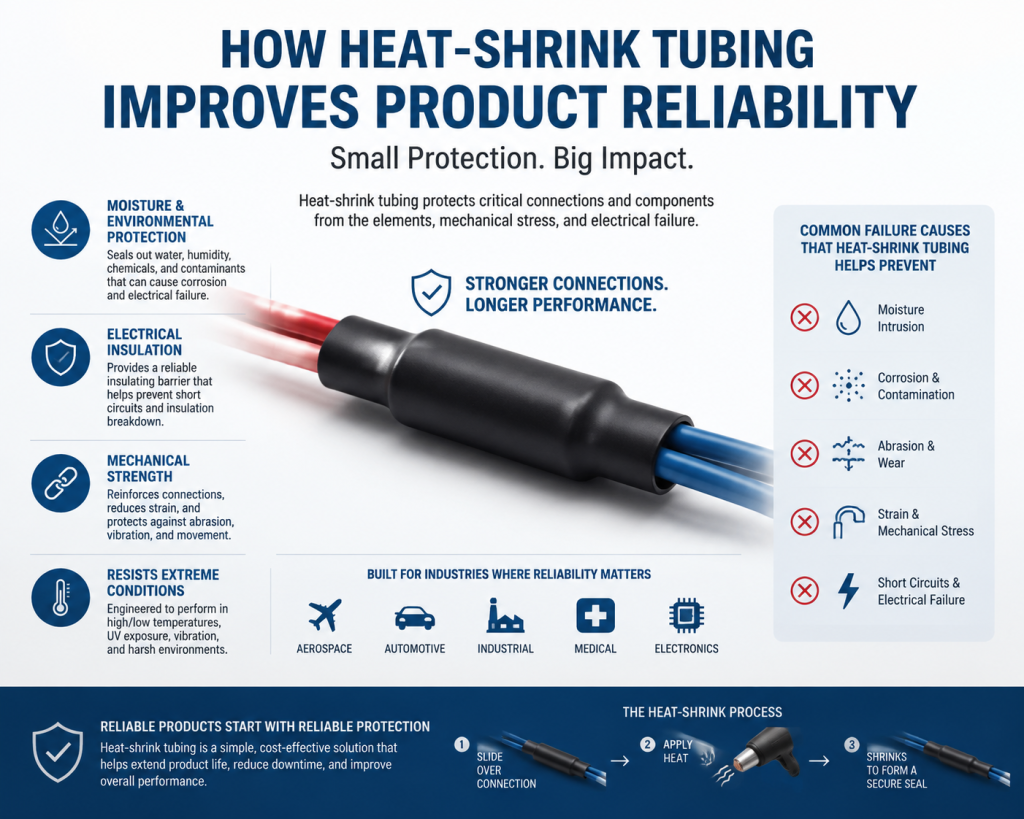
Heat-shrink tubing is a flexible polymer sleeve that contracts when exposed to heat. Before heating, the tubing is installed over a wire, cable, splice, or component. Once heated, it shrinks tightly around the object, creating a protective layer.
The shrinking process allows the tubing to conform closely to irregular shapes while providing:
- Electrical insulation
- Mechanical protection
- Moisture resistance
- Abrasion resistance
- Strain relief
- Environmental sealing
Because of these protective properties, heat-shrink tubing is widely used in applications where product reliability is critical.
Protecting Electrical Connections From Failure
Electrical connections are often among the most vulnerable parts of a product. Exposed wires, solder joints, terminals, and connectors can be damaged by movement, moisture, chemicals, and temperature changes.
Heat-shrink tubing provides an additional protective barrier around these areas.
By covering exposed connections, heat-shrink tubing helps prevent:
- Short circuits
- Corrosion
- Wire damage
- Insulation breakdown
- Connector failures
A protected electrical connection is far more likely to maintain consistent performance throughout the product’s expected lifespan.
Preventing Damage From Moisture and Contaminants
Many products operate in environments where exposure to water, humidity, dust, oils, and chemicals is unavoidable.
Without proper protection, these contaminants can penetrate electrical systems and cause corrosion or electrical failure.
Certain types of heat-shrink tubing, including adhesive-lined varieties, create a sealed barrier around components. When heated, the inner adhesive melts and fills gaps, improving protection against:
- Water intrusion
- Dirt and debris
- Chemical exposure
- Environmental contaminants
This makes heat-shrink tubing especially valuable for outdoor equipment, industrial systems, automotive applications, and harsh operating environments.
Improving Mechanical Strength and Durability
Electrical failures do not always happen because of electrical problems. Mechanical damage is another major cause of product failure.
Wires and connectors can experience:
- Pulling forces
- Bending stress
- Vibration
- Repeated movement
- Abrasion against surrounding components
Heat-shrink tubing reinforces vulnerable areas and helps distribute mechanical stress more evenly.
For example, tubing installed over a cable connection can reduce strain at the point where wires enter a connector. This helps prevent bending-related failures and extends the usable life of the assembly.
Reducing Wire Harness Failures
Wire harnesses are essential components in many industries, including automotive, aerospace, electronics, and industrial manufacturing.
A damaged wire harness can create expensive problems, including:
- Equipment downtime
- Difficult troubleshooting
- Safety risks
- Costly repairs
Heat-shrink tubing helps organize and protect wire assemblies by:
- Bundling wires together
- Preventing abrasion between cables
- Improving insulation
- Protecting connection points
For manufacturers, this results in more consistent and reliable products.
Enhancing Resistance to Extreme Conditions
Many products must operate in challenging conditions where standard insulation materials may not provide enough protection.
Heat-shrink tubing can be engineered for applications involving:
- High temperatures
- Low temperatures
- Chemicals
- UV exposure
- Vibration
- Mechanical stress
Different materials and designs offer different performance advantages. Selecting the correct heat-shrink tubing for an application is essential for maximizing reliability.
Factors such as shrink ratio, wall thickness, material type, and operating environment should all be considered during product design.
Supporting Long-Term Product Performance
Product reliability is not only about preventing immediate failures. It is about ensuring consistent performance over years of operation.
Heat-shrink tubing contributes to long-term reliability by reducing wear and protecting critical components before problems occur.
For manufacturers, this can lead to:
- Fewer warranty claims
- Reduced maintenance requirements
- Improved customer satisfaction
- Longer product lifecycles
A small protective component can have a significant impact on the overall quality of a finished product.
Why Engineers Specify Heat-Shrink Tubing Early in Design
The best reliability improvements often happen during the product development stage.
Engineers who consider heat-shrink tubing early in the design process can create assemblies that are better protected from the beginning.
Early consideration allows designers to select the correct:
- Tubing material
- Shrink ratio
- Temperature rating
- Adhesive properties
- Wall thickness
- Color coding options
Integrating protection into the original design reduces the need for modifications later and helps ensure consistent manufacturing results.
Heat-Shrink Tubing in Critical Industries
Heat-shrink tubing is used across many industries where reliability matters.
Common applications include:
Aerospace
Aircraft systems require components that can withstand vibration, temperature changes, and strict reliability requirements.
Automotive
Vehicles depend on durable wiring systems that must survive heat, moisture, vibration, and movement.
Medical Devices
Medical equipment often requires dependable electrical protection to maintain safe operation.
Industrial Equipment
Factories and machinery rely on protected wiring systems to reduce downtime and maintenance costs.
Electronics Manufacturing
Consumer and industrial electronics use heat-shrink tubing to improve durability and protect sensitive connections.
Choosing the Right Heat-Shrink Tubing for Reliability
Not all heat-shrink tubing is designed for the same purpose. Choosing the correct product requires understanding the application requirements.
Important considerations include:
Shrink Ratio
Higher shrink ratios allow tubing to fit over larger components while shrinking tightly around smaller areas.
Material Selection
Different materials provide different levels of resistance to heat, chemicals, and environmental exposure.
Wall Thickness
Thicker walls generally provide greater mechanical protection, while thinner walls offer flexibility.
Operating Environment
Temperature, moisture, vibration, and chemical exposure all influence the ideal tubing choice.
Working with an experienced heat-shrink tubing supplier can help ensure the right solution is selected.
Conclusion
Heat-shrink tubing is a small component that provides significant reliability benefits. By protecting electrical connections, preventing environmental damage, reducing mechanical stress, and improving durability, it helps manufacturers create products that perform better and last longer.
For industries where reliability is essential, heat-shrink tubing is more than just insulation — it is an important part of designing dependable, high-quality products.
Whether used in industrial equipment, automotive systems, electronics, or specialized manufacturing applications, the right heat-shrink tubing solution can help prevent failures before they happen.