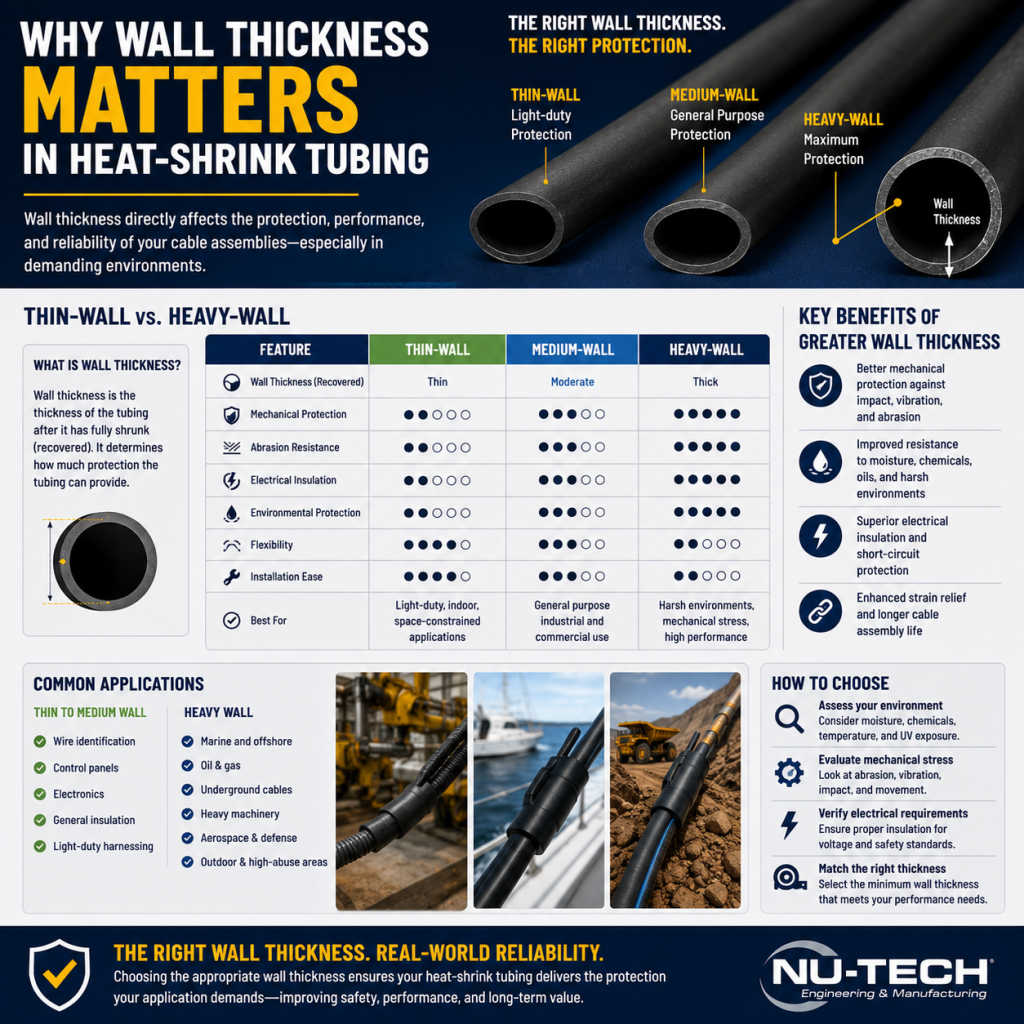
 When selecting heat-shrink tubing, factors like shrink ratio, material, and operating temperature often receive the most attention. However, one specification that is just as important—but frequently overlooked—is wall thickness.
The wall thickness of heat-shrink tubing directly affects its durability, insulation properties, environmental protection, and overall performance. Choosing the appropriate wall thickness can improve the lifespan of cable assemblies, reduce maintenance costs, and ensure reliable operation in demanding environments.
In this article, we’ll explain what wall thickness is, why it matters, and how to choose the right option for your application.
What Is Wall Thickness?
Wall thickness refers to the thickness of the tubing after it has fully recovered (shrunk) around the cable or component.
Different heat-shrink tubing products are manufactured with varying wall thicknesses depending on their intended use. Generally, they fall into three categories:
- Thin-wall heat-shrink tubing
- Medium-wall heat-shrink tubing
- Heavy-wall heat-shrink tubing
Each offers a different balance of flexibility, protection, and durability.
Why Wall Thickness Is Important
The thicker the protective layer surrounding a cable, the greater its ability to withstand physical damage and harsh environmental conditions.
However, thicker is not always better.
Selecting the correct wall thickness means matching the tubing to the demands of the application rather than choosing the heaviest product available.
The right choice can improve:
- Electrical insulation
- Mechanical protection
- Moisture resistance
- Chemical resistance
- Abrasion resistance
- Long-term reliability
Improved Mechanical Protection
One of the primary advantages of thicker-wall tubing is increased resistance to physical damage.
Industrial cable assemblies are frequently exposed to:
- Abrasion
- Vibration
- Impact
- Crushing forces
- Repeated movement
A thicker protective layer helps absorb these stresses before they reach the underlying cable.
This is especially important in manufacturing equipment, transportation systems, heavy machinery, and outdoor installations.
Better Electrical Insulation
Heat-shrink tubing serves as an insulating barrier between electrical conductors and their surroundings.
Thicker wall tubing generally provides additional insulation, helping protect against:
- Electrical shorts
- Accidental contact
- Voltage leakage
- Connection failures
For many industrial applications, reliable insulation is essential to maintaining safe and consistent system performance.
Greater Environmental Protection
Many cable failures begin with environmental exposure.
Moisture, dirt, chemicals, oils, and corrosive substances can gradually damage wiring and connectors.
Thicker wall heat-shrink tubing creates a more substantial barrier against these hazards.
When combined with adhesive-lined construction, it can provide an even higher level of environmental sealing for harsh operating conditions.
Increased Abrasion Resistance
Cable assemblies often move against nearby equipment or structural components.
Over time, this friction can wear through cable insulation.
Heavy-wall tubing offers greater resistance to abrasion, making it well suited for applications involving:
- Heavy equipment
- Industrial machinery
- Marine systems
- Transportation
- Mining operations
- Construction equipment
Enhanced Strain Relief
Stress often concentrates where cables enter connectors or transition between different diameters.
Thicker heat-shrink tubing reinforces these vulnerable areas and distributes mechanical loads more evenly.
This added support helps reduce conductor fatigue and extends cable life.
Thin-Wall vs. Heavy-Wall Heat-Shrink Tubing
Understanding the differences between thin-wall and heavy-wall products helps ensure the right selection.
Thin-Wall Heat-Shrink Tubing
Thin-wall tubing is commonly used when flexibility and ease of installation are priorities.
Typical applications include:
- Wire identification
- General electrical insulation
- Consumer electronics
- Control panels
- Light-duty cable protection
Advantages include:
- Lightweight construction
- Greater flexibility
- Faster shrinking
- Easier installation
- Lower overall profile
Heavy-Wall Heat-Shrink Tubing
Heavy-wall tubing is designed for more demanding environments where durability is essential.
It is often used for:
- Underground cable protection
- Utility applications
- Marine cable assemblies
- Heavy industrial equipment
- Outdoor electrical systems
- Mechanical protection
Advantages include:
- Increased durability
- Greater abrasion resistance
- Improved impact resistance
- Better environmental sealing
- Longer service life
Choosing the Right Wall Thickness
Several factors should be considered when selecting heat-shrink tubing.
Operating Environment
Ask whether the cable will be exposed to:
- Moisture
- UV radiation
- Chemicals
- Oils
- Abrasion
- Extreme temperatures
Harsh environments typically benefit from thicker tubing.
Mechanical Stress
Applications involving vibration, movement, or frequent handling often require greater protection than stationary installations.
Electrical Requirements
Higher-performance electrical systems may require additional insulation depending on the application and industry standards.
Flexibility
Some installations require cables to bend frequently or fit into tight spaces.
In these situations, thinner wall tubing may provide better flexibility while still delivering adequate protection.
Space Constraints
Equipment with limited clearance may not accommodate heavy-wall tubing.
Selecting the appropriate balance between protection and profile is important.
Common Industries That Benefit from Heavy-Wall Tubing
Thicker-wall heat-shrink tubing is commonly used in:
- Aerospace
- Defense
- Marine
- Oil and gas
- Utilities
- Industrial manufacturing
- Transportation
- Renewable energy
- Telecommunications infrastructure
These industries often require cable protection capable of withstanding demanding operating conditions over long service lives.
Can You Choose a Wall That’s Too Thick?
Yes.
Using tubing with more wall thickness than necessary can increase installation difficulty, reduce flexibility, and add unnecessary cost.
For applications that require only basic insulation and light protection, thin-wall tubing may be the more practical choice.
The goal is not simply to select the thickest tubing available, but to choose the product that best matches the application’s performance requirements.
Working with an Experienced Supplier
Heat-shrink tubing is available in numerous materials, shrink ratios, wall thicknesses, and performance grades.
An experienced supplier can help determine which combination is appropriate based on:
- Cable size
- Environmental conditions
- Mechanical demands
- Electrical requirements
- Industry standards
Selecting the proper tubing from the beginning helps reduce maintenance, improve reliability, and extend equipment life.
Conclusion
Wall thickness is one of the most important characteristics of heat-shrink tubing because it directly influences insulation, durability, abrasion resistance, strain relief, and environmental protection.
Thin-wall tubing offers flexibility and ease of installation for lighter-duty applications, while heavy-wall tubing provides superior protection for demanding industrial environments.
By understanding how wall thickness affects performance, engineers, maintenance professionals, and OEM manufacturers can select the right heat-shrink tubing for safer, longer-lasting cable assemblies and more reliable electrical systems.