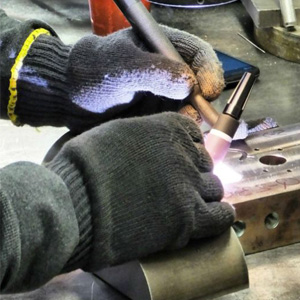
 As modern engineering continues to push the limits of size, precision, and performance, manufacturing methods must evolve to keep up. Microscopic TIG welding has emerged as a critical process in industries where even the smallest component can determine the success or failure of an entire system. By allowing engineers to create clean, controlled welds at an extremely small scale, this technique plays a vital role in advancing technology across multiple fields.
Precision That Matches Modern Design Demands
Advanced engineering often involves highly intricate components with tight tolerances. Traditional welding methods can struggle to deliver the level of control required for these applications. Microscopic TIG welding, however, provides the precision needed to work on delicate parts without compromising their structure.
This level of accuracy is especially important when working with thin materials or complex geometries. Engineers rely on consistent, high quality welds to ensure that components function exactly as designed. Even minor inconsistencies can lead to performance issues, making precision welding essential.
Supporting Miniaturization Across Industries
One of the defining trends in advanced engineering is miniaturization. From medical devices to electronic components, products are becoming smaller while maintaining or even increasing their functionality. Microscopic TIG welding enables this shift by making it possible to join tiny parts without adding unnecessary bulk or damage.
This capability is crucial in fields where space is limited and performance is critical. By allowing for strong, reliable connections at a micro level, this welding method helps engineers design more compact and efficient systems.
Enhancing Reliability in Critical Applications
In industries such as aerospace, medical manufacturing, and electronics, reliability is non negotiable. Components must perform consistently under demanding conditions, often with no margin for failure. Microscopic TIG welding contributes to this reliability by producing clean, controlled welds with minimal defects.
The process reduces the risk of contamination, weak joints, or structural inconsistencies. As a result, engineers can trust that their designs will hold up under real world conditions. This level of confidence is essential when dealing with safety critical applications.
Enabling Work with Advanced Materials
Modern engineering frequently involves the use of specialized materials that offer unique properties, such as high strength, corrosion resistance, or heat tolerance. These materials often require precise handling during the welding process.
Microscopic TIG welding allows for careful control of heat input, which is essential when working with sensitive or high performance alloys. This makes it possible to join materials without compromising their properties, preserving the integrity of the final product.
Improving Quality Control and Consistency
Consistency is a key factor in advanced engineering, especially in high volume or high precision production environments. Microscopic TIG welding supports this by offering repeatable results when performed correctly.
With proper technique and equipment, welders can achieve uniform welds across multiple components. This consistency simplifies quality control and reduces the likelihood of defects. For engineers, this means fewer failures, lower costs, and greater overall efficiency.
Integrating with Modern Manufacturing Technologies
As manufacturing becomes more advanced, processes must integrate seamlessly with new technologies. Microscopic TIG welding works well alongside automated systems, precision tooling, and advanced inspection methods.
This compatibility allows it to fit into modern production environments where accuracy and efficiency are prioritized. Whether used in small scale custom work or larger production runs, it remains a valuable tool for achieving high quality results.
Driving Innovation Through Precision
Innovation often depends on the ability to turn complex ideas into reality. Microscopic TIG welding helps bridge that gap by enabling the creation of components that would otherwise be difficult or impossible to produce.
By supporting intricate designs and high performance requirements, this process allows engineers to explore new possibilities. It plays a quiet but important role in the development of next generation technologies.
Conclusion
Microscopic TIG welding is more than just a specialized technique. It is a key enabler of advanced engineering across a wide range of industries. By offering unmatched precision, supporting miniaturization, and ensuring reliability, it helps engineers meet the growing demands of modern design.
As technology continues to evolve, the importance of precise and dependable manufacturing processes will only increase. Microscopic TIG welding stands as a critical part of that future, helping bring innovative ideas to life with accuracy and confidence.